
Where Do Rappers Get Their Clothes? The 5 Places They Shop

Where do rappers get their clothes? There is no single store. Rap wardrobes come from five channels at once: luxury houses, streetwear labels, artist-owned merch, vintage and resale, and small independent brands. And for established artists, a second question sits underneath the first, because much of it is not bought at all. It is pulled, seeded, or paid for by the brand.
This guide covers every channel, names dozens of brands with founding years and cities, and explains the mechanism that puts a jacket on an artist in the first place. Prices and retailers checked August 2026.

In stock, in your size, no drop window
Channel six below, with the blend and weight published on every page. Free shipping to every country we ship to, no minimum, 14-day returns.
View cart →


Swipe for more →
How rappers get the clothes: pulls, seeding and deals
Most guides list stores. They skip the part that explains the photographs you are looking at. There are four routes, and only one of them is shopping.
The pull. A stylist borrows a piece from a brand's press showroom for a shoot or a red carpet, and the garment goes back afterwards, often within a day or two. Ownership never moves. Wardrobe stylists work largely from designer samples lent during the months before a collection reaches retail, and returning those samples is a standing part of the job.
The gift, or seeding. The brand sends the piece and does not ask for it back, hoping it gets worn and photographed. The difference from a pull is legal rather than sentimental: a loan is returned, a gift transfers ownership, and US tax authorities treat brand gifts to public figures as reportable income rather than presents, because they are sent in expectation of exposure.
The endorsement. Money changes hands. The landmark in rap is Run-DMC, who in mid-1986 signed a $1.6 million deal with Adidas, the first sneaker endorsement given to anyone outside sport. Their single "My Adidas" came first, and an Adidas executive was invited to Madison Square Garden to watch the crowd hold their shoes in the air.
Buying it. Which is what most artists did before any of the above was on offer, and what artists earlier in a career still do. Misa Hylton, who styled Lil' Kim, Mary J. Blige and Foxy Brown, told Complex about the 1990s Chanel looks: "We would buy our own pieces." She added that she had done showroom pulls, but never worked with the house directly.
Not everyone takes the free route. Corteiz founder Clint Ogbenna has refused seeding from the start, posting in 2020: "No sponsored ads, no free clothes."
1. Rapper designer clothes: the luxury houses
Rapper designer clothes usually means this tier. Gucci, Louis Vuitton, Dior and Balenciaga are the European houses most often named. Rick Owens and Amiri sit at similar prices but are American labels: Owens was founded in Los Angeles in 1994, Amiri in Los Angeles in 2014.
The tier's history in rap starts in Harlem, and it starts with a refusal. Dapper Dan opened his boutique on 125th Street in 1982 and made custom garments from the logos and materials of European luxury houses, dressing Mike Tyson, LL Cool J, Eric B. & Rakim and Salt-N-Pepa. He did it because those houses would not sell to his clients directly. In 1992, after legal action by Fendi, the store was shut down. In 2017 Gucci showed a jacket derived from one of his 1989 designs, and in 2018 the house opened an atelier with him on Lenox Avenue. That is the literal answer to the question: in the 1980s, rappers who wanted luxury had it made.
The route now runs the other way. Virgil Abloh founded Off-White in 2013 and in March 2018 became artistic director of Louis Vuitton menswear, the first person of African descent to lead the house's menswear. After his death in 2021, Louis Vuitton named Pharrell Williams men's creative director in February 2023. We traced that whole arc in the history of hip hop fashion, era by era.
Where to shop this lane: house boutiques and their own sites, plus multi-brand retailers such as SSENSE, END. and Farfetch. Buy here for one piece, not a wardrobe.
2. Streetwear labels
The middle tier is where most of the recognizable silhouettes come from. Supreme opened on Lafayette Street in New York in April 1994, founded by James Jebbia. A Bathing Ape was founded in Tokyo by Nigo in 1993 and spread through mid-2000s rap via Pharrell and Kanye West. Stüssy, Carhartt WIP, Palace, Kith (opened by Ronnie Fieg in New York in November 2011), Aimé Leon Dore (Teddy Santis, Queens, 2014) and Corteiz (Clint Ogbenna, London, 2017) fill out the same shelf. Trapstar, Vlone, Fear of God, Hellstar and Eric Emanuel belong here too.
Two things to know before you buy here. Popular releases sell out fast and often resell above retail, so patience saves you more than any discount code. And the logo is the graphic, so a piece reads as a specific season. Resale listings are sorted by season for the same reason. For the era that leaned hardest on visible branding, see the y2k rapper outfit guide.
Where to shop this lane: the labels' own sites on release days, then Grailed and StockX for anything you missed.
3. The 1990s labels that built the category
Before streetwear was a category, a generation of Black-owned labels built the market everything above now sells into. Most guides skip them, and the story makes no sense without them.
FUBU, "For Us, By Us", was founded in Queens in 1992 by Daymond John, Carlton Brown, J. Alexander Martin and Keith Perrin, and passed $350 million in annual sales by 1998. In 1997 LL Cool J wore a FUBU cap in a Gap commercial and worked the phrase into his verse. The cap stayed in the finished ad.
Cross Colours was founded in Los Angeles in 1989 by Carl Jones and T.J. Walker, printing "Clothing Without Prejudice" on the garments themselves. Karl Kani, born Carl Williams, took his brand name from the question "can I", and incorporated Karl Kani Infinity in 1994. Russell Simmons founded Phat Farm in 1992, and Kellwood bought Phat Fashions in 2004 for $140 million. Sean Combs launched Sean John in 1998 and won the CFDA menswear designer of the year award in 2004. Marc Ecko founded Ecko Unltd in 1993. Enyce was founded in New York in 1996 by Evan Davis, Lando Felix and Tony Shellman, the same trio behind Mecca USA, which launched at MAGIC in 1994.
Wu Wear, started by Oliver "Power" Grant in 1995, was the model everyone else copied: a rap group selling its own clothing rather than licensing its name to somebody else's.
4. Artist-owned lines
Plenty of rappers get their clothes from themselves. Jay-Z co-founded Rocawear in 1999. Pharrell launched Billionaire Boys Club in 2003 with Nigo, manager Rob Walker and designer Sk8thing. Nelly launched Apple Bottoms in 2003. 50 Cent announced G-Unit Clothing the same year in a partnership with Marc Ecko. Drake and Oliver El-Khatib started OVO's clothing line in 2011. Lil Wayne launched Trukfit in 2012. Young Thug launched Sp5der in 2019. Tyler, The Creator runs Golf Wang, and Tremaine Emory's Denim Tears uses garments to carry a historical argument rather than a logo.
The best place to buy official merch from a hip hop artist online is almost always the artist's own webstore during a release cycle, because most of these lines are sold direct and pulled when the drop ends. This tier matters for a reason that has nothing to do with fashion: it is where the margin is. Merch is one of the few parts of a rap career the artist owns outright, which is why the larger lines run on a seasonal calendar rather than a tour-only drop.
Where to shop this lane: the artist's own store, usually tied to a release or a tour. Buy during the drop window, because restocks are not guaranteed.
5. Vintage, archive and resale
The cheapest way into the look, and the one that produces the most individual results. Rap has always run on found garments: military surplus, Champion reverse weave, 1990s sports jerseys, faded band and tour tees.
The trade-off is time. You are hunting, not shopping. Stock is one-of-one, so the piece you find may not exist in your size, and sizing on a thirty-year-old garment rarely matches a modern label. Measure a shirt you already own and compare it against the listing's flat measurements rather than trusting the tag.
Where to shop this lane: Grailed and Depop for curated listings, eBay for tour tees, Vinted and Poshmark for volume, and any local vintage store with a sportswear rail. Vintage prints are fragile, so read make your streetwear last before the first wash.
6. Independent brands that dress the people making the record
The last channel is the least visible and the most useful if you are the one in the studio rather than on the poster. Small independent labels design for the working side of the culture: producers, engineers, writers, DJs. The graphics reference the job instead of a fanbase, and most of these labels are small enough that you find them through a producer forum, a Discord, or the merch table at a beat battle rather than through search.
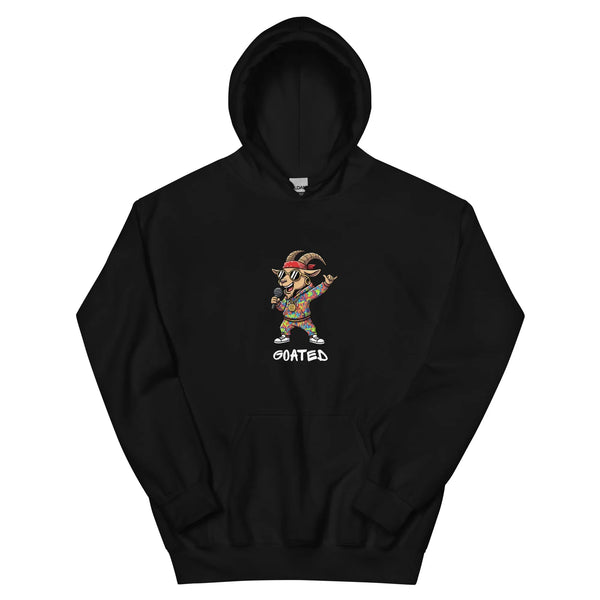
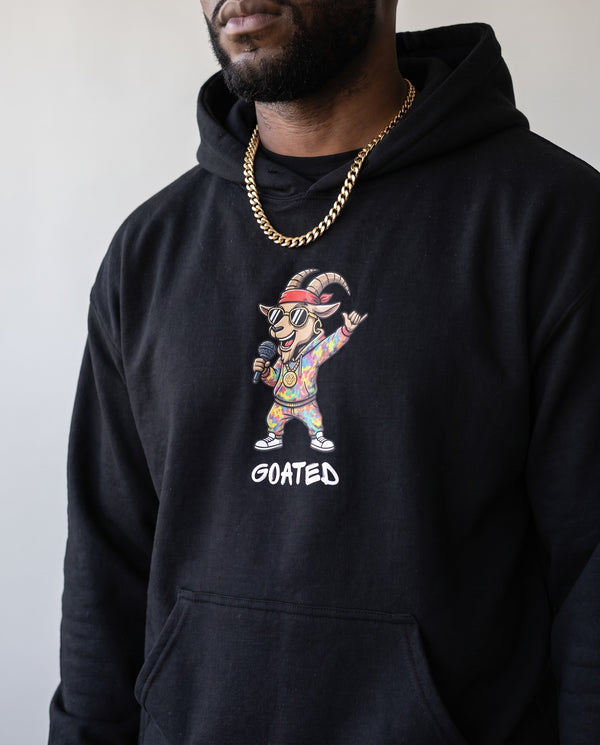
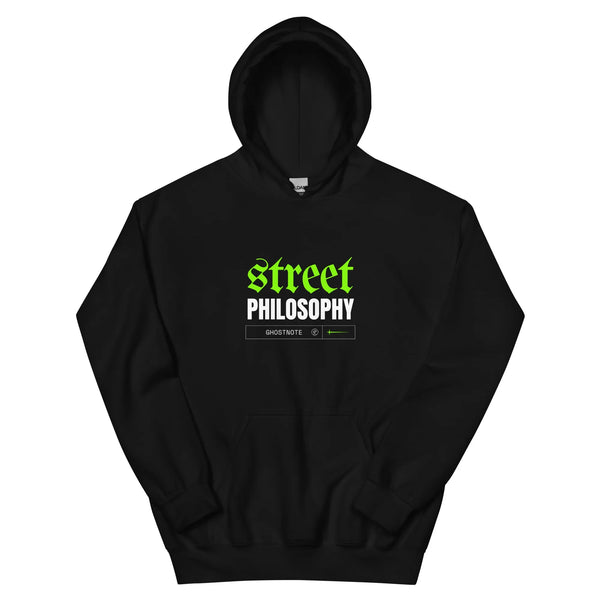
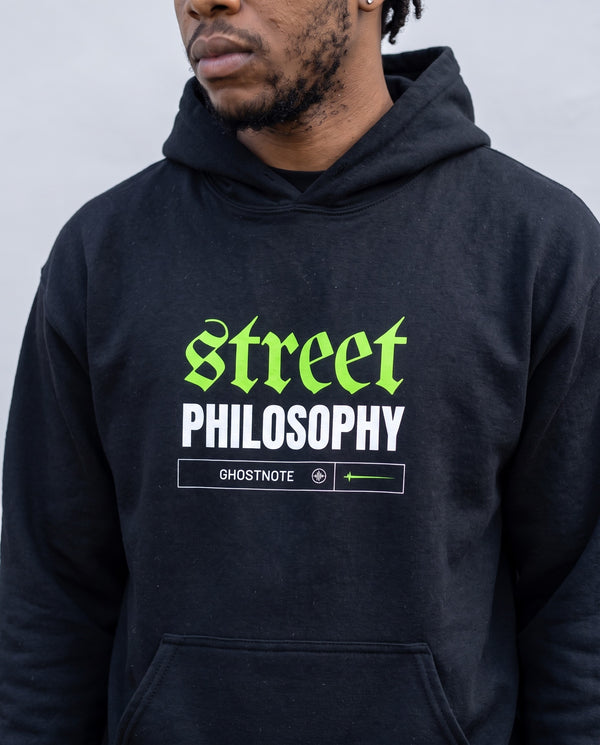
This is the lane Ghostnote sits in, and its pieces name what the wearer does. Four of them, with the published specs:
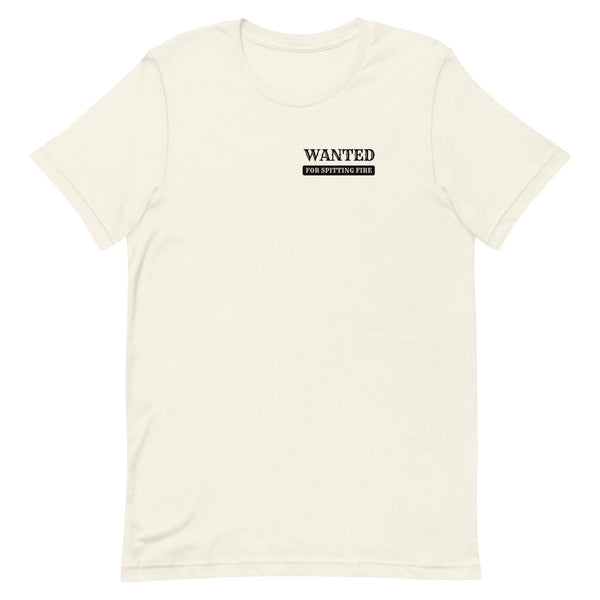
Wanted For Spitting Fire | Lyricist Tee, $34.99. A wanted-poster graphic aimed at writers rather than listeners, in beige and white.

Goated | Rapper Hoodie, $49.99. A 50/50 cotton-polyester hoodie at 8.0 oz per square yard, in black, navy and gray.

Street Philosophy Hoodie, $49.99. Also 50/50 cotton-polyester at 8.0 oz, in black, navy and green.

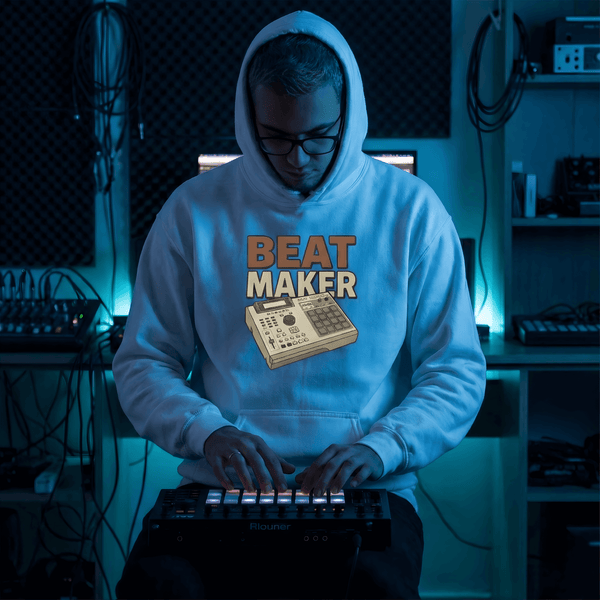
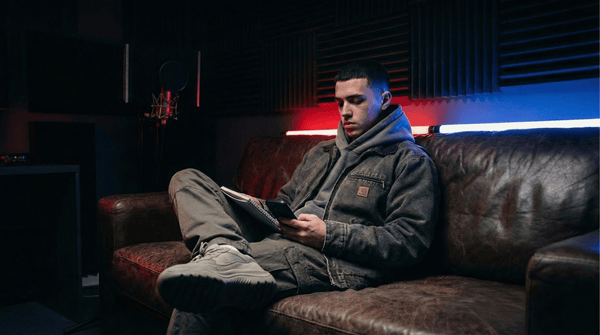
Firemaker Hoodie, $49.99, is the piece in the image at the top of this guide.

Where to shop this lane: the brands' own sites. Stock is standing rather than drop-based, so there is no queue and no resale premium. Sizes run S to 2XL with a chart on every product page, shipping is free to every country we ship to, with no minimum, and returns run 14 days. The hoodies above sit in rapper hoodies and hip hop hoodies, and the wider range is in rapper outfits.
The women who set the template
Any answer to this question that names only men is missing where a lot of the ideas came from.
Misa Hylton designed the lavender jumpsuit Lil' Kim wore to the 1999 MTV Video Music Awards, using Indian bridal fabric and having it custom made. June Ambrose built the looks behind Missy Elliott's 1997 video for "The Rain", including the inflated black suit, and the shiny suits in "Mo Money Mo Problems". Aaliyah became a Tommy Hilfiger spokesperson in the mid 1990s, and the company sold more than 2,400 pairs of the red, white and blue baggy jeans she wore in the campaign.
The current generation runs the same playbook with more leverage. Cardi B launched a Fashion Nova line in November 2018 and was named Playboy's creative director in residence in December 2021. Nicki Minaj's Fendi "Prints On" capsule, 127 pieces, arrived in October 2019. Nike signed Megan Thee Stallion in November 2021. Ice Spice fronted the Adidas x Ivy Park campaign in early 2023.
The brands: founded, based, lane
Founding years and cities, no rankings. The price band is the brand's typical range, not a quote.
| Brand | Founded | Based | Lane | Band |
|---|---|---|---|---|
| Cross Colours | 1989 | Los Angeles | 1990s | $ |
| Karl Kani | 1989 | Los Angeles | 1990s | $$ |
| FUBU | 1992 | Queens, NY | 1990s | $ |
| Phat Farm | 1992 | New York | 1990s | $$ |
| A Bathing Ape | 1993 | Tokyo | Streetwear | $$$ |
| Ecko Unltd | 1993 | New Jersey | 1990s | $ |
| Mecca USA | 1994 | New York | 1990s | $ |
| Supreme | 1994 | New York | Streetwear | $$ |
| Rick Owens | 1994 | Los Angeles | Luxury | $$$$ |
| Wu Wear | 1995 | Staten Island | Artist-owned | $ |
| Enyce | 1996 | New York | 1990s | $ |
| Sean John | 1998 | New York | Artist-owned | $$$ |
| Rocawear | 1999 | New York | Artist-owned | $$ |
| Billionaire Boys Club | 2003 | New York | Artist-owned | $$$ |
| Apple Bottoms | 2003 | New York | Artist-owned | $$ |
| G-Unit Clothing | 2003 | New York | Artist-owned | $$ |
| OVO | 2011 | Toronto | Artist-owned | $$$ |
| Kith | 2011 | New York | Streetwear | $$$ |
| Trukfit | 2012 | Los Angeles | Artist-owned | $ |
| Off-White | 2013 | Milan | Luxury | $$$$ |
| Amiri | 2014 | Los Angeles | Luxury | $$$$ |
| Aimé Leon Dore | 2014 | Queens, NY | Streetwear | $$$ |
| Corteiz | 2017 | London | Streetwear | $$ |
| Denim Tears | 2019 | New York | Artist-owned | $$$ |
| Sp5der | 2019 | Atlanta | Artist-owned | $$$ |
| Hellstar | 2020 | Los Angeles | Streetwear | $$ |
Brands whose founding year is disputed across sources are named in the text but left out of the table rather than guessed at, which is why Trapstar, Vlone, Fear of God, Broken Planet, Eric Emanuel and Yeezy do not appear here.
Where to buy rap tees
Tees are the cheapest way into every lane above, and each lane sells them differently.
Official artist and tour tees: the artist's own store during a release cycle, then the licensed merch retailers. Def Jam's shop sells its own catalogue, Rockabilia carries licensed band and rap merch, and Hot Topic stocks several hundred licensed hip hop items.
Vintage rap tees: Grailed, Depop and eBay. A single-stitch hem generally indicates a shirt made before the mid-to-late 1990s, which is the detail resellers price on. Check the print for cracking in the listing photos before you bid.
Multi-brand streetwear retailers: HipHopCloset, Karmaloop and Culture Kings carry the streetwear and 1990s revival labels in one place.
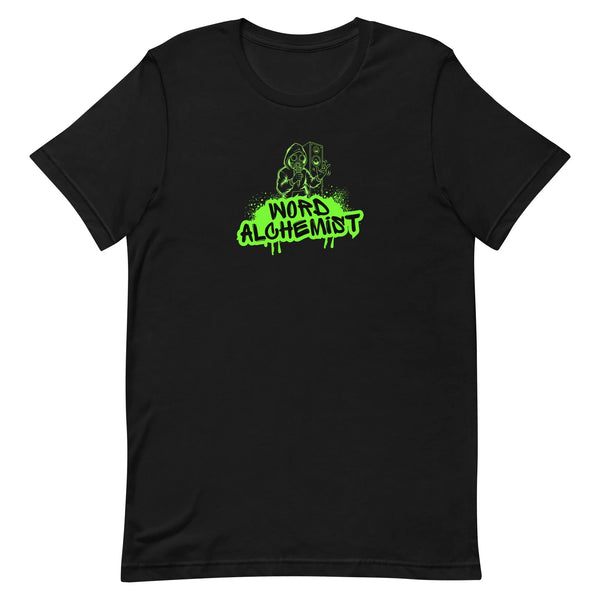
Graphic tees you can buy today: independent labels, where stock is standing rather than a drop. Ghostnote's sit in rapper tees and hip hop graphic tees, from $34.99.
808 Sorcerer | Music Producer Tee, $34.99, is a producer-side example of the same format: 100% combed and ring-spun cotton at 4.2 oz, in black and navy.

How to judge a piece before you buy
Start with fit, not brand. Then four checks that work regardless of where you are shopping.
Fabric weight. Hoodies are measured in GSM, or in ounces per square yard on US listings, and the two describe the same thing: how much fabric you are getting. A midweight hoodie sits around 8 oz, and heavier blanks climb from there. What matters more than hitting a number is that the seller publishes one at all. If a listing says heavyweight without a figure anywhere on the page, that silence is information.
Print method. Screen print sits on the fabric and can crack along fold lines over time, which is largely a laundry problem and is why washing a graphic tee to stop the print cracking is worth five minutes. Embroidery generally survives washing longer and costs more to produce. Direct-to-garment gives fine detail but tends to fade sooner. None is wrong; they age differently.
Cotton blend. Pure cotton breathes and shrinks. A 50/50 cotton-polyester blend resists shrinking and holds color, which is why it is a common hoodie blend. We covered the care side in detail in how to wash 50/50 hoodies.
Shoulder seam. On a boxy fit the seam should drop past your shoulder deliberately, not accidentally. If it lands halfway down your bicep on a size you normally wear, the pattern is off rather than oversized.
Frequently asked questions
Where do rappers get their clothes?
From five channels at once: luxury houses such as Gucci and Louis Vuitton, streetwear labels such as Supreme and BAPE, their own artist-owned merch lines, vintage and resale platforms such as Grailed and Depop, and small independent brands. Established artists also receive clothes without buying them, through stylist pulls, brand seeding and paid endorsement deals.
What clothing brands do rappers wear?
Across five lanes: European luxury houses including Gucci, Louis Vuitton, Dior and Balenciaga; streetwear including Supreme, A Bathing Ape, Palace, Kith and Corteiz; 1990s labels including FUBU, Karl Kani, Cross Colours, Phat Farm and Sean John; artist-owned lines including Rocawear, Billionaire Boys Club, OVO, Golf Wang, Denim Tears and Sp5der; and independent brands. The table above lists 26 with founding years and cities.
Where do rappers buy their clothes online?
Multi-brand retailers such as SSENSE, END. and Farfetch for designer pieces, the labels' own sites on release days for streetwear, and Grailed, Depop, StockX, eBay and Vinted for anything sold out or vintage. Artist merch is usually sold only through the artist's own store during a release cycle.
Where can I buy rap tees?
For vintage and tour tees, Grailed, Depop and eBay hold the deepest stock, and a single-stitch hem generally indicates a pre-mid-to-late-1990s shirt. For licensed artist merch, Def Jam's shop, Rockabilia and Hot Topic. For graphic tees available today without waiting for a drop, independent labels keep standing stock in current sizes.
What counts as rapper designer clothes?
Usually high-end fashion houses with a long rap association: Gucci, Louis Vuitton, Dior and Balenciaga from Europe, and American labels such as Rick Owens and Amiri at similar prices. The link is historical. Dapper Dan made custom garments from luxury logos in Harlem from 1982 to 1992, launched a line with Gucci in 2017, and opened a Harlem atelier with the house in 2018.
Where do most celebrities buy their clothes?
For public appearances, many do not buy at all. A stylist borrows the piece from a brand's press showroom and returns it after the shoot, so the garment is a loan rather than a purchase. Off camera, the same shops and resale platforms everyone else uses.
Do rappers get their clothes for free?
Established artists often do, through brand seeding and endorsement deals. The template is Run-DMC, whose 1986 single "My Adidas" led to the first sneaker endorsement given to anyone outside sport, worth $1.6 million. Artists earlier in their career generally pay retail, and some refuse free product on principle.
Where can I buy hip hop clothes on a budget?
Vintage and resale give the lowest entry price and the most individual results, at the cost of hunting time and inconsistent sizing. Independent brands are the cheapest route to new stock in your size. Buying a designer piece secondhand is often cheaper than buying the same item new.
Wear it
The pieces this guide is built around. Every one ships free, no minimum.