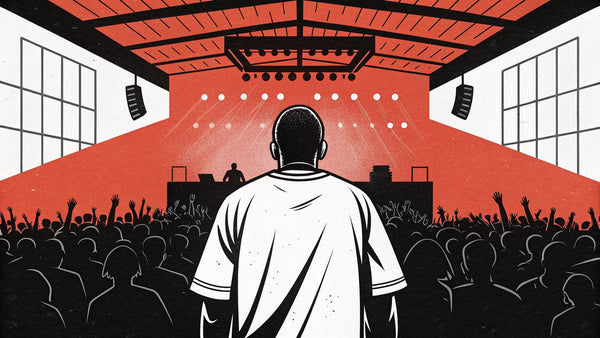

What Do DJs Wear? A 2026 Style Guide

What do DJs wear? The short answer: whatever lets them work for four hours straight without falling apart. A DJ outfit has to survive booth heat, sweat, bad lighting and a thousand phone cameras pointed at it. It is part performance, part labor uniform, and the best of it does both jobs at once. If you spend your nights behind the decks, your clothes are working gear before they are anything else. This guide breaks down what actually holds up in 2026: why all-black keeps winning, how club, festival and wedding gigs change the brief, which shoes survive four hours on concrete, and the two accessories (headphones and earplugs) that do more for you than anything else you put on.
Quick disclosure: we're Ghostnote, and we make two things: hip hop clothing (hoodies, tees, beanies, caps) and audio plugins for producers and engineers. This article has exactly one short section of our own stuff, clearly labeled near the end. Every other brand named here is something we don't sell and earn nothing from, and there are no affiliate links anywhere in this piece.

What to wear it with
Four pieces that match what you are reading. Free shipping, no minimum, 14 day returns.
A DJ Outfit Is Working Gear First
People watch a producer hunched over a laptop. They watch a DJ from the front, lit up, hands moving, often for hours. That changes the math. Your outfit is on display the entire set, but it also has to let you reach, lean, jump and ride a fader without binding at the shoulders or riding up at the waist. Stiff fabric and tight cuts read fine in a photo and feel like a straitjacket by the second hour.
So the first rule of DJ style is movement: clothes that follow your arms instead of fighting them. The second rule is heat management, because a packed room plus stage lights plus adrenaline turns most booths into saunas. Midweight cotton and cotton blends breathe and hold their shape; anything plasticky plasters to your back by track ten. Relaxed through the body beats skin-tight every time. You want air between you and the cloth, because that gap is what keeps you cool when the room does not. Everything else in this guide comes back to those two facts.
Why DJs Wear All Black
Walk into almost any booth on earth and you will see black, black and more black. There is a reason DJs default to it, and it is not just that it looks good — although it does.
- It hides sweat. Two hours in, a gray shirt tells the whole story. Black keeps your business to yourself.
- It hides stains. Spilled drinks, smoke, the grime that lives on every piece of club furniture. Black forgives all of it.
- It photographs clean. Under colored lights, black holds its shape while bright colors blow out and clash with whatever the lighting tech is doing.
- It is a uniform you cannot get wrong. Black on black on black is a decision you make once and never second-guess at 11pm.
All-black also lets the few pieces you do accent actually land. A patch, a graphic, a single contrasting beanie reads louder against a black base than it ever would in a busy outfit. That restraint is the whole point: the decks are the show, your clothes are the frame.
Club, Festival or Wedding: Dress for the Gig
"What do DJs wear" has at least three different answers depending on where the decks are standing. Scroll the booth photos in any DJ Mag gallery and you can usually guess the venue from the outfit alone.
The club gig
The all-black default was built for this room. A heavyweight black tee, a layer you can shed, and dark, durable bottoms. A plain work pant like the Dickies 874 has been a club staple for decades because it moves, hides everything and survives being washed to death. Club booths are cramped and hot, so nothing flowing and nothing that dangles into the gear.
The festival slot
Outdoors, the weather runs the booth. Daytime sets mean sun: a cap or bucket hat, sunglasses that stay put when you jump, and a light tee you accept will be sacrificed to dust or mud. Then the sun drops and the temperature falls off a cliff, so a hoodie or overshirt waits in your bag for the second half. One more thing changes outside: crowds read you from fifty meters, so silhouette and contrast land better than any small graphic. It is why the festival fits in Mixmag coverage look bolder than club fits: they have to be legible from the back of a field.
The wedding or corporate booking
The one gig with an actual dress code, and the move is simple: ask whoever booked you. The answer usually lands somewhere between "all black, please" and business casual. You can keep your identity in the cut (a clean black button-up or knit polo, dark trousers, spotless dark shoes) without showing up to someone's reception in a graphic tee. They hired a professional. Dress like the fee.

The Best Shoes for DJing: Four Hours on Concrete
Nobody sees your feet in the booth, and your feet know it. Most booths are concrete, or plywood over concrete, and a standing set is a four-hour shift on it. Cushioning stops being a preference and becomes the difference between playing your last hour and merely surviving it.
- Cushioned runners. This is why running-shoe DNA took over the booth. A New Balance 990-series or 2002R gives you long-shift comfort that now reads as intentional style rather than a compromise.
- The rave trail shoe. The Salomon XT-6 became the unofficial club shoe of the 2020s for reasons beyond hype: a grippy outsole for beer-slick floors, quick-lace, and cushioning designed for actual trails.
- Flat classics, with help. Vans and Converse look right in every booth photo ever taken and feel brutal by hour three. If you are loyal to the look, drop a cushioned insole in and thank yourself later.
- Boots. Dr. Martens read perfectly in darker scenes and shrug off dropped flight cases. Just break them in long before a gig.
Two rules whatever you choose: dark colorways, because spilled drinks find every white sneaker eventually, and never debut new shoes at a set. The booth is not where you want to discover where they rub.
DJ Headphones: The Signature Accessory
Headphones are the one piece of gear that is also part of the outfit: around your neck they are jewelry, on your head they are the tool. A few standards dominate booths for good reasons:
- Sennheiser HD 25 ($130–$160). The club standard, essentially unchanged since the late '80s: light, loud, takes a decade of abuse, and every part is user-replaceable. The split headband and flip-away earcup exist precisely for one-ear cueing.
- Pioneer DJ HDJ series. Made by the company behind the CDJs already in front of you, tuned for isolation in loud booths.
- AIAIAI TMA-2. Fully modular (every component swappable) and the default in a certain kind of Berlin-coded booth.
- V-MODA Crossfade. Metal build for people whose headphones live loose in a backpack with cables and a laptop.
Two practical notes. Keep the cable coiled or short. Nothing long enough to loop a jog wheel. And buy for comfort on one ear, because that is how you will actually wear them most of the night.
Hearing Protection: The Least Visible Thing You Wear
The least glamorous item in this guide is the one that keeps you employed. NIOSH puts the safe exposure limit at 85 decibels averaged over eight hours, and every 3 dB above that cuts the safe time in half, numbers a loud club blows through before your first transition. Your ears are the entire business, and you are exposed longer and more often than almost anyone on the floor.
High-fidelity earplugs cut volume without smearing the mix. Loop's Experience line is the current favorite and discreet enough to disappear on camera; the Etymotic ER20XS ($20–$40) has been the working-musician standard for years; custom-molded plugs from an audiologist ($100+) are the pro tier once the gigs get regular. Wear them at other people's sets too. The most punk thing you can put on is the thing that lets you still hear music at sixty.
Layering for Venue Temperature Swings
A DJ's night runs cold-hot-cold: an empty room at soundcheck, a sauna at peak time, a street at 4am. Layers are how one outfit covers all three. The workhorse setup is a good loose tee under an open hoodie. You start covered, peel down to the tee mid-set, and throw the hoodie back on for the load-out. A black overshirt does the same job with a dressier read for lounge and wedding work.
The same layering logic drives a lot of 2026 producer streetwear, because the people making the music and the people playing it live in the same rooms and want the same things from their clothes.
From the Booth to the After-Party
Your night rarely ends when the set does. There is the breakdown, the green room, the walk to the next spot, the after-party where you are now a guest instead of the act. A smart DJ outfit handles all of it without a costume change: the hoodie goes back on for the cold load-out, the clean tee underneath keeps you presentable in whatever room you walk into next, and the whole kit reads as one continuous look instead of a stage costume you are stuck wearing to a 4am taco stand.
Durability is the quiet requirement. This stuff gets thrown in a bag, dragged through venues, sweated through and washed hard. Cheap pieces pill, sag and die in a month of real use. Spend once on things that last.
From Our Own Line
This is the one section where we sell our own stuff, so skip it freely.
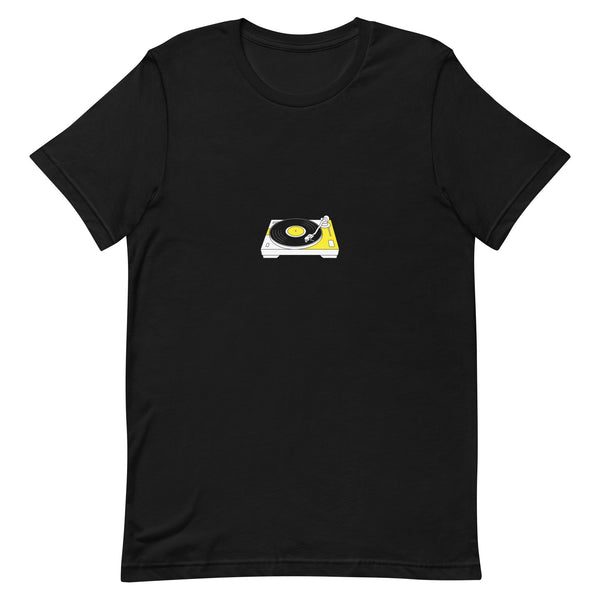
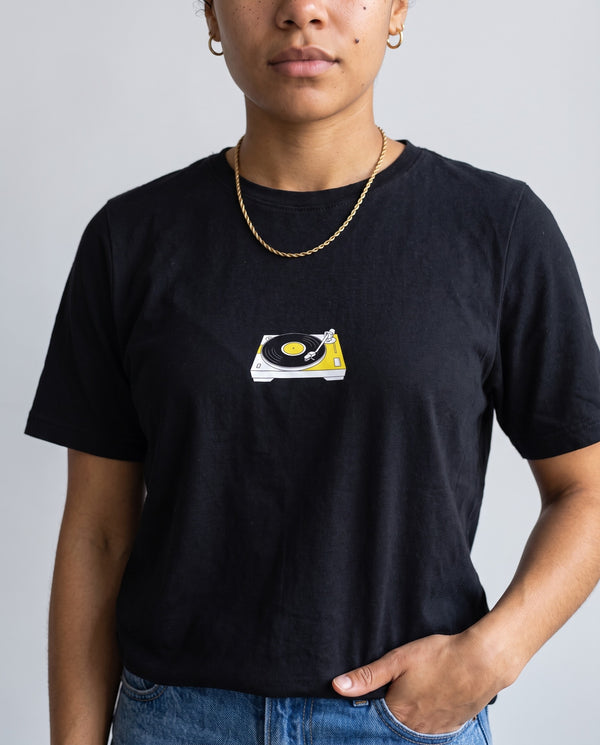
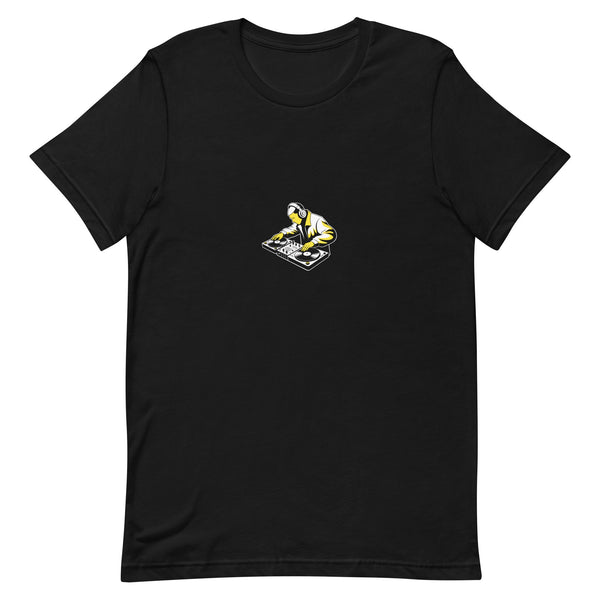
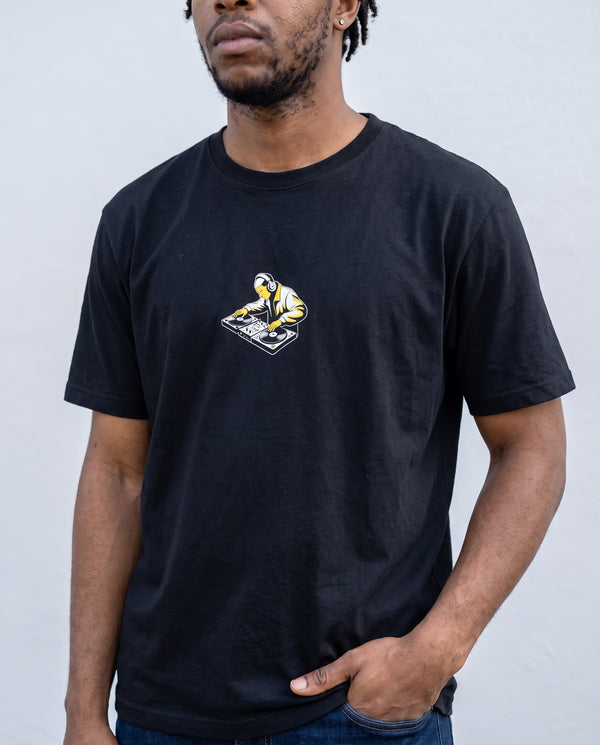
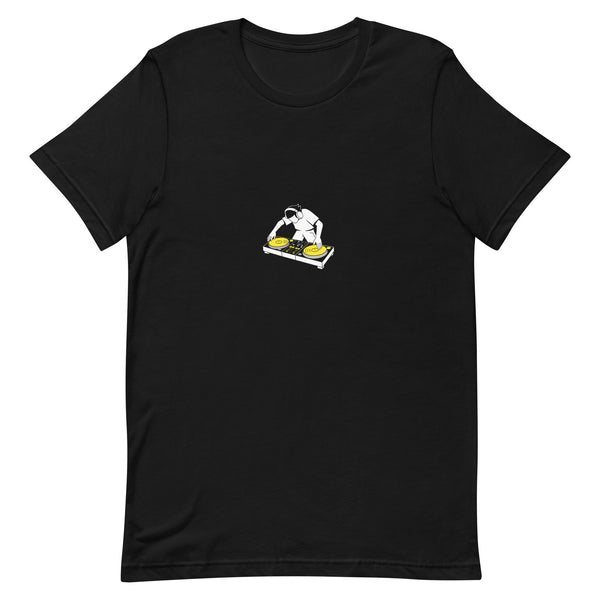
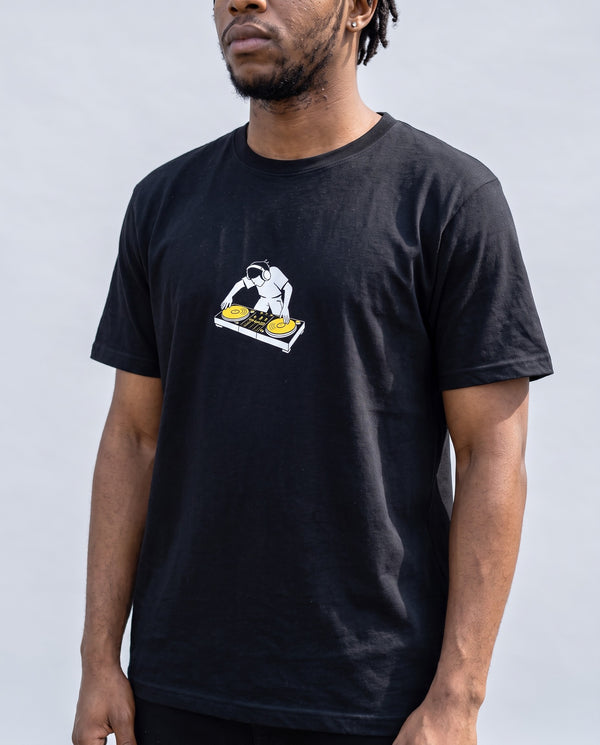
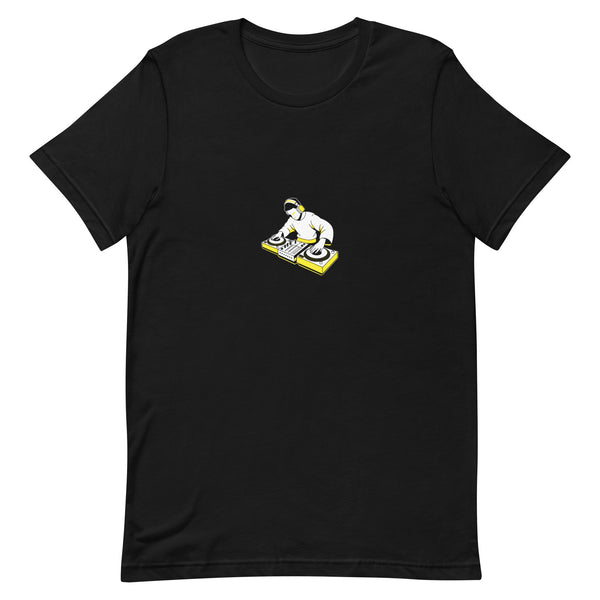
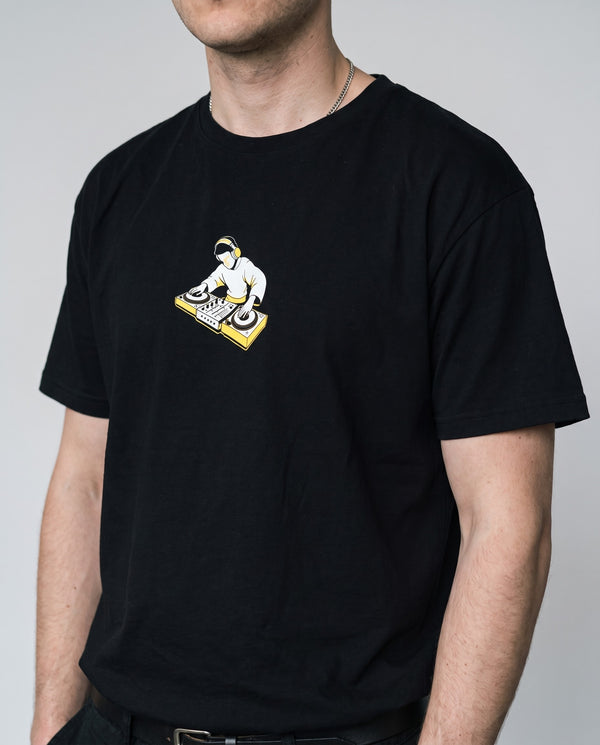
We do not make DJ gear. We make black studio basics: hoodies, tees, cuffed beanies and caps designed around music culture, not printed for fans. The most booth-relevant thing we make is the Beatmaker beanie ($29.99): a cuffed knit that sits flat under headphones and keeps sweat out of your eyes. The closest thing we make to a booth shirt is the set of four in our DJ tees collection ($34.99 each), all black, printed with turntables and hands mid-scratch. If you want the same black base with louder artwork, the rest sit in hip hop graphic tees. For the layer, our hip hop hoodies ($49.99) are midweight fleece, mostly black, and cut loose enough to mix in, and shipping is free to every country we ship to. That is the whole pitch.

Beatmaker Cuffed Beanie
Cuffed knit that sits flat under headphones and keeps sweat out of your eyes. $29.99.
Shop the beanie ›

Hip Hop Hoodies
Midweight fleece, mostly black, cut loose enough to layer in a hot booth. From $49.99.
Browse the hoodies ›
FAQ: What DJs Wear
Is there a DJ dress code?
No club hands you one, but the unwritten code is consistent: all black, relaxed fit, dark closed shoes, nothing that dangles into the equipment. Weddings and corporate events are the exception. Those gigs come with an actual dress code, and the professional move is to ask for it before you pack.
How do you dress like a DJ?
Black, breathable, closed shoes. A relaxed black tee or long sleeve, a hoodie or overshirt you can pull on for the load-out, bottoms that let you crouch behind the booth, and dark cushioned sneakers with nothing dangling near the equipment. Add a cap or one of the best beanies for rappers and producers if you want the accent piece, and keep earplugs in the pocket.
What shoes do DJs wear?
Mostly dark, cushioned sneakers. New Balance and Salomon XT-6s are everywhere right now because a standing set is four hours on concrete. Flat classics like Vans and Converse are the traditional look but need an insole for long sets, and Dr. Martens hold down the darker scenes.
Why do DJs wear headphones around their neck?
Because they use them every couple of minutes to cue the next track, and the neck is the only place to park them between uses. Do that for enough years and it becomes the trade's badge, which is why headphones read as part of the outfit even when nobody is mixing.
Do DJs really wear earplugs while performing?
The smart ones do. High-fidelity earplugs lower the volume without muffling the mix, so you can still hear your blend while protecting the one asset your career actually depends on. Loop and Etymotic make the common booth picks; custom molds are the upgrade once gigs are weekly.
The Bottom Line
The DJ uniform exists because it works. A couple of heavyweight black tees, one or two hoodies you can layer, bottoms that move, dark cushioned shoes, a beanie or cap, headphones you trust and earplugs you actually wear. That rotation covers the club, the festival, the load-out and the after-party without a second thought. The decks are the show. Dress like the person running it.
Wear it
The pieces this guide is built around. Every one ships free, no minimum.