
What Do Music Producers Wear? The Studio Dress Code

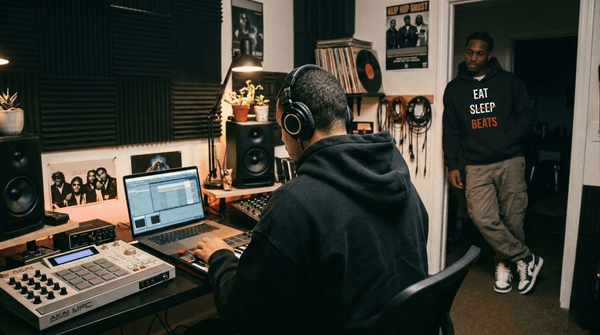
The studio has a dress code. Nobody wrote it down, but anyone who's spent serious time behind the boards already knows it. It's not about looking good for the 'gram. It's about showing up ready to work. Comfortable enough to stay locked in for 12 hours. Sharp enough to command respect the moment an artist or A&R walks through the door.
If you've ever wondered what music producers wear day to day, not the red carpet version, this is it.

What to wear it with
Four pieces that match what you are reading. Free shipping, no minimum, 14 day returns.




The Hoodie: The Foundation of Every Producer Fit
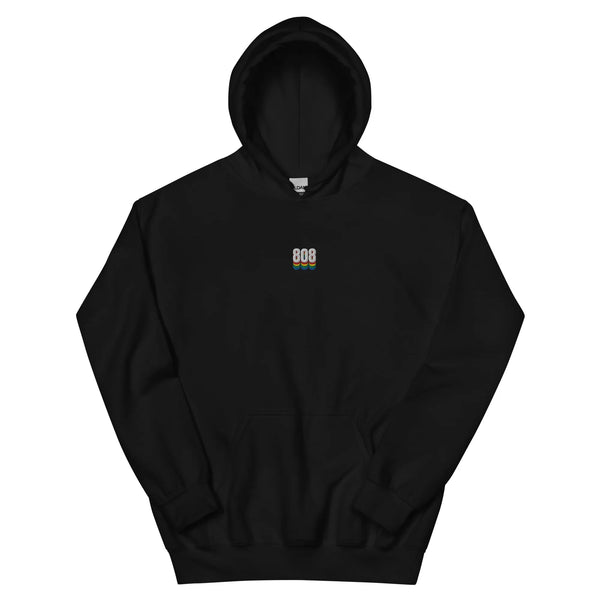
Ask any beatmaker what they wear in the studio 90% of the time. The answer is a hoodie. Not because it's trendy, but because it works. Studios run cold. Sessions run late. A midweight pullover hoodie keeps you in the zone without ever having to think about it.
The cold is not a comfort footnote, it is a performance one. Alan Hedge's month-long Cornell study of office keyboard work found that letting the room fall from 77 to 68 degrees Fahrenheit raised typing error rates from 10 percent to 25 percent and cut output sharply (Cornell Chronicle, 2004). A control room you cannot warm is a room where the hoodie counts as equipment.
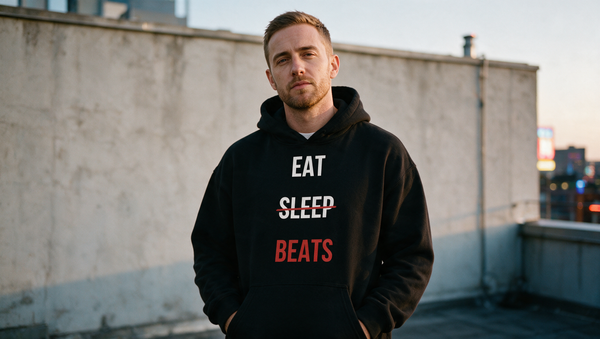
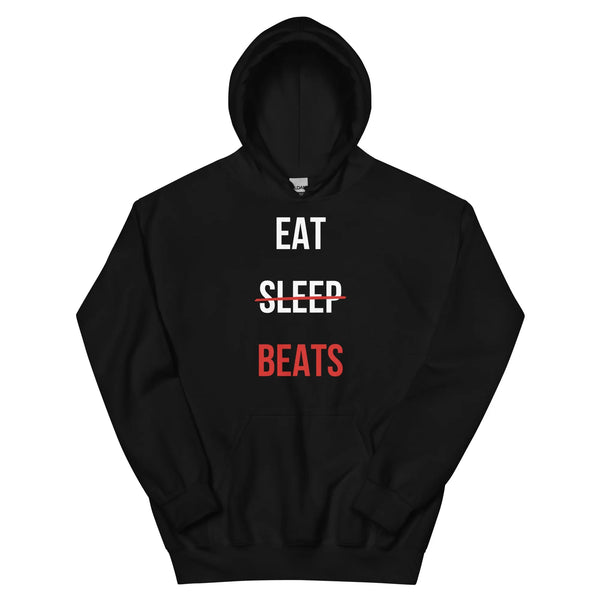
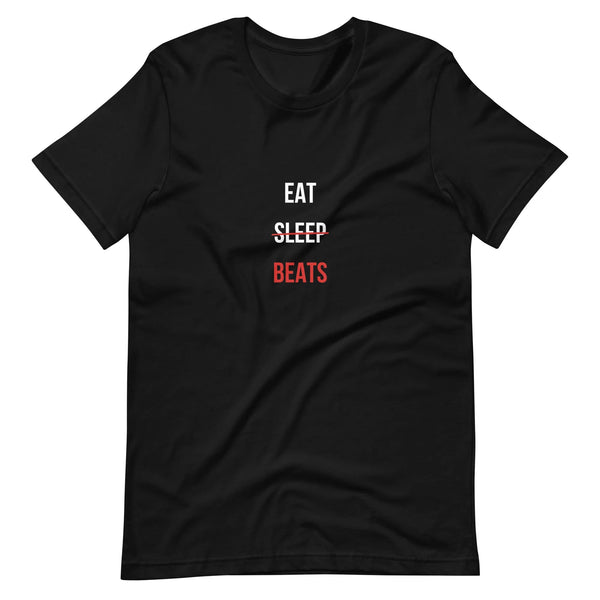
The key is weight and fit. You want something that drapes properly: sized to feel relaxed, quality enough to look intentional. Graphics that mean something to the culture. A hoodie that says "Beatmaker" or "Eat Sleep Beats" isn't just clothing. It's a statement about where your priorities are.

That is the Beatmaker Hoodie in the photo above. Browse the music producer hoodie collection to find the one that belongs in your rotation.
The Tee: Your Everyday Signature
Under the hoodie or flying solo, the graphic tee is how a producer broadcasts who they are without saying a word. These aren't random prints. They're identity markers for people who live the craft.
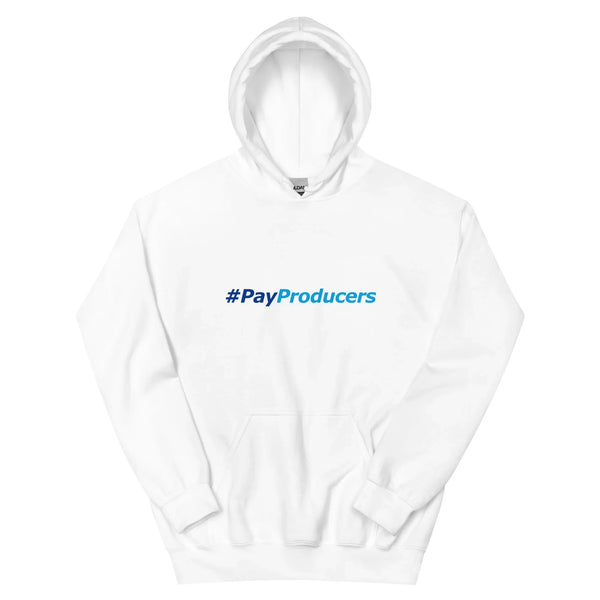
#PayProducers. Eat Sleep Beats. Let Him Cook. Every graphic in a good producer's wardrobe carries a message. It starts conversations with the right people and filters out the ones who don't get it. That's exactly how it's supposed to work.

On its own, a clean graphic tee is enough for a full studio day. Layered under an open overshirt or under a hoodie, it adds depth to the look without any extra effort.

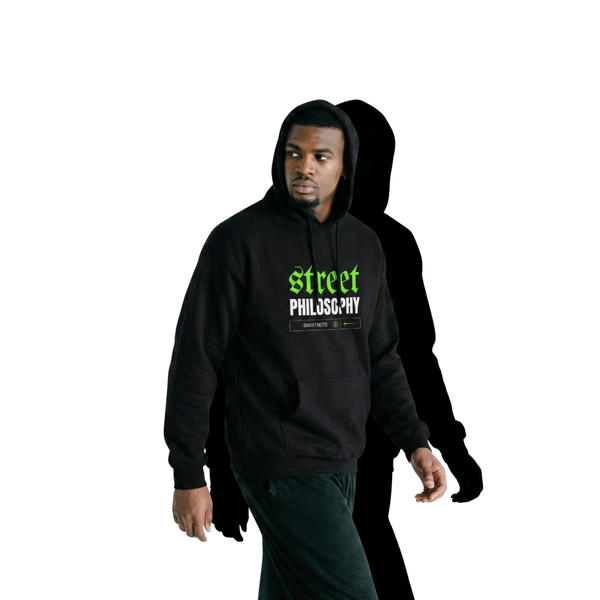
The Off The Grid tee is the plainest version of that idea, and the rest of the music producer tee collection has the pieces worth adding.

The Beanie: The Finishing Touch
Underrated. Always. The right beanie ties an entire fit together, adding texture, intention, and that final layer of studio energy that makes the look complete. The wrong beanie (or no beanie) and something just feels off.
We ranked the ones that survive daily wear in the guide to the best beanies for rappers and producers. A clean knit beanie in black or grey works with everything. Graphic embroidery (HUSTLE, a hip hop head, your producer tag) turns it into a statement piece. Either way, it's one of those accessories that looks effortless but does a lot of heavy lifting.

Pictured above is the Hip Hop Monkey Beanie. Find yours in the hip hop beanie collection.
The Full Producer Fit: How It Comes Together
Here's how it actually looks in practice: midweight graphic hoodie. Baggy jeans or relaxed joggers. Clean sneakers. Beanie on top. That's the uniform. Simple, intentional, built for focus.
The producers you look up to aren't overthinking their fits. They're wearing pieces that represent their craft, feel comfortable for long sessions, and look good whether they're in the studio, on a feature, or at a show. The formula isn't complicated, just consistent.
Where to Build Your Producer Wardrobe
Ghostnote Supply is built specifically for the music producer, the beatmaker, and the creative who lives in the studio. Every piece is designed with the culture in mind: midweight fleece and cotton, bold graphics, and fits that work from session to street.
Browse the full music producer outfit collection and start building the wardrobe your work deserves.
It changes by role
"Producer" covers four fairly different jobs, and the working uniform shifts with each one.
The beatmaker. Usually working alone, often at home, often late. This is the most relaxed end: hoodie, tee, joggers, no shoes at all half the time. Nobody is walking in, so comfort wins outright and the only real constraint is temperature.
The mixing or mastering engineer. Seated in one position for the whole session, frequently with a client behind the chair. Plainer, tidier, and quieter: no jewellery that clicks against a desk, nothing that rides up when seated, a layer that can come off as the room warms.
The artist-producer. On the other side of the glass as often as behind the desk, so the fit has to survive being filmed. This is where graphics and silhouette start doing real work, because a phone comes out at some point in almost every session.
The touring or live producer. Different problem entirely. Load-in, stage heat, long travel days. Durable over soft, layers that pack flat, and footwear that handles a venue floor rather than a rug.
Home studio versus commercial studio
The room matters as much as the role. A home setup is a room you control: you set the thermostat, nobody is arriving, and the dress code is whatever keeps you working. A commercial studio is a room you do not control, kept cold to stop outboard gear and amplifiers overheating in a space sealed for sound, with a booth that often runs stuffy in the opposite direction.
That single difference explains most of what producers wear. The layered hoodie-over-tee is not a style choice so much as the only sensible answer to two rooms with opposite climates, twenty feet apart. We went into why those rooms run so cold in why recording studios are so cold, and the long-session version of the fit is in the music producer outfit guide.
What producers wear: common questions
What do music producers wear day to day?
A hoodie or crewneck, a graphic or blank tee underneath, relaxed joggers or denim, and trainers. It reads as casual because it is, but it is chosen for a room that runs cold and a session that runs long rather than for a photograph.
Is there a dress code for a recording studio?
Nothing written down, but there are conventions. Dress for a cold control room, avoid anything that rustles near a live microphone, and keep it deliberate enough that a client walking in reads you as working rather than lounging.
What do mixing and mastering engineers wear?
The same base layers, usually plainer. Engineers spend the session seated in one position with clients behind them, so the priorities are a top that does not ride up, no jewellery that clicks against a desk or fader, and a layer that comes off when the room warms up.
Do producers dress differently for sessions with artists?
Most step it up slightly. The fit does not change shape, the pieces just get less worn-in: a clean hoodie rather than the studio one, better trainers. The point is to look like the session is being run by someone, without changing into something you cannot work in.
What should a producer avoid wearing in the studio?
Stiff denim that fights an eight-hour sit, hoods with hard drawcord tips that knock against a chair, bangles or chains near a live mic, and heavy jackets in a room whose temperature you do not control. Anything a condenser picks up from across the room is worth leaving at the door.
Shop the producer dress code
Put it into practice with music producer outfits and producer tees. Studio-ready cuts, identity-first graphics.
Wear it
The pieces this guide is built around. Every one ships free, no minimum.