
Rapper Sweatshirts: The 2026 Buyer's Guide

The rapper sweatshirt is the closest thing hip hop has to a uniform. Before the chains, before the kicks, before any of it, there was a heavyweight pullover doing the heavy lifting. It works in the booth at 3am, on the block, on the cover, on the stage when the lights drop and the bass hits. This is the 2026 buyer's guide to that garment: what separates a real rap sweatshirt from mall filler, the brands rappers actually wear, how to hunt vintage without getting burned, and how to style the thing once you own it.
Quick disclosure before we start: we're Ghostnote, and we make studio apparel (hoodies, tees, beanies and caps). We don't make a single sweatshirt, so nearly everything recommended below is from brands we have no relationship with and earn nothing from. Our own closely related gear sits in one clearly labeled section near the end. No affiliate links anywhere in this article.

Why the Sweatshirt Is a Hip Hop Staple
Hip hop was built in basements and bedrooms, not boardrooms. The sweatshirt fit the work. It was warm in a cold studio, loose enough to move in, cheap enough to ruin and replace, and blank enough to make your own. From the park jams of the South Bronx to the home studios running today, the rap sweatshirt has stayed because it never pretended to be anything it wasn't.
The receipts are everywhere. The plain gray gym-issue crewneck became a statement the moment rappers wore it like one. Carhartt went from Midwest job sites to practically every New York video of the 90s. The point was never to look expensive. The point was to look like you belonged to something. A good rapper sweatshirt does that without trying. It says you're here for the craft, not the costume.
What Makes a Rapper Sweatshirt: Fit, Weight, Fabric
Strip away the logos and the rapper sweatshirt is a specific garment: boxy through the body, dropped at the shoulder, heavy in the hand, with ribbed cuffs and hem so the silhouette stacks instead of sagging. Graphics minimal or absent. If it drapes like a t-shirt, it's the wrong garment.
Weight is measured in GSM (grams per square meter), and it tells you almost everything about how a piece will wear.
- Under 250 GSM: light French terry. Fine as a layering piece, but it goes limp in the wash and loses its shape inside a season.
- 250 to 350 GSM: midweight, and what most fleece on the market actually is. Warm without being a furnace, and the band that works in a room you can heat.
- 400 GSM and up: true heavyweight. It hangs with weight, holds its shape for years, and feels like something. Worth paying for if the room stays cold, overkill if it does not.
Fabric matters as much as weight. Look for a high cotton content with a brushed fleece interior, ringspun if you can find it, because it makes the surface smoother and any print crisper. Double-stitched seams and ribbed cuffs are the difference between a sweatshirt that survives a tour and one that sags after a month.
Crewneck vs Hoodie: Which to Choose
The first real decision is silhouette. Both have their place, and most artists end up owning both, but they send different signals.
The crewneck
The crewneck is the cleaner option. No hood bunching at the neck, no drawstrings in the frame. It photographs flat and sharp, which is why it reads so well on cover art and in video. It layers under a jacket without bulk. If you want something that looks intentional rather than thrown on, the crew is your move.
The hoodie
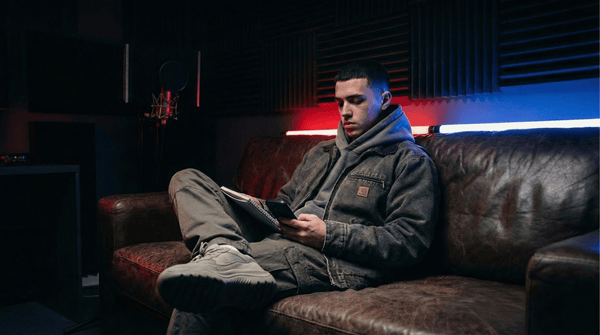
The hoodie is armor. The hood up is its own statement, a way to disappear into the music or shut out the room. It runs warmer and reads more casual. If the crewneck is the studio shirt, the hoodie is the late-night-walk-home shirt. Plenty of artists keep both in rotation; our rapper hoodies cover that side of the wardrobe, and the rapper hoodies buyer's guide works through the same questions for hoods.
The Sweatshirt Brands Rappers Actually Wear in 2026
Nobody paid to be on this list, and prices are ballpark, so check current prices before you buy. These are the names that keep showing up in studios, green rooms and video shoots, from budget blanks to designer diffusion.
Champion Reverse Weave (~$60–80)
The blueprint. Champion developed the Reverse Weave construction back in the 1930s: fleece cut on the cross-grain with side gussets so it doesn't shrink into a crop top after five washes. The plain gray Reverse Weave crew has been rap-video canon for decades, and it's still one of the best fabric-per-dollar buys on this list.
Carhartt WIP (low $100s)
Nineties New York rap turned Carhartt from workwear into wardrobe. Carhartt WIP, the brand's streetwear line, keeps the heavyweight fabric and cuts the fit for the culture that adopted it. A WIP crew reads workwear from across the street and fashion up close, which is exactly the trick.
Fear of God Essentials (~$100)
Jerry Lorenzo's diffusion line is the modern rapper's off-duty default: boxy, dropped shoulders, muted tones, branding kept quiet. Mainline Fear of God costs several times more; Essentials gets you the silhouette for around a hundred bucks, which is why it's in every green room.
Stussy (north of $100)
The original streetwear brand, running since the early 80s and somehow still in the videos. A Stussy crew with the script logo is the safest "I know what I'm doing" pick in the mid-tier. Classic enough to keep for years, current enough to wear tonight.
Los Angeles Apparel ($60–70)
The industry's worst-kept secret. Los Angeles Apparel's 14 oz heavy fleece, sewn in South Central, is the blank a lot of artist merch gets printed on in the first place. Buy it blank and you're getting merch-table quality without somebody else's name on your chest.
Camber USA (under $100)
The fabric nerd's answer. Camber sews cult-favorite heavyweights in Pennsylvania, thicker than almost anything else in production and priced like the workwear they technically are. Not fashionable, which at this point is the fashion.
Pro Club (under $50)
West Coast rap's blank of record. Pro Club built its reputation on heavyweights that are cheap, boxy and nearly indestructible. Buy two, wear them into the ground, repeat. If the entire budget is fifty dollars, this is the answer.
Russell Athletic (~$40)
The company credited with inventing the sweatshirt in the 1920s. Modern Russell crews aren't the bruisers the vintage ones were, but as an entry point (or a thrift target, see below), the name still means something.
Nike (varies)
The sweatsuit side of the equation. Nike Tech Fleece owns the airport-to-tour-bus fit, and NOCTA, Drake's line with the swoosh, turned it into a whole aesthetic. Less heavyweight heritage, more "landed an hour ago, straight to soundcheck."
Vintage Tour Merch and Thrifting: The Other Way In
The most respected sweatshirt in the room is usually the one nobody else can buy. A crew from a tour that actually happened, faded exactly right, outranks anything hanging in a store. Old Supreme box-logo crews and vintage Champion Reverse Weave have become grails in their own right.
Hunt on Grailed and Depop for curated (and priced accordingly) pieces, and eBay for the deep water where the deals still live. Expect anything from $20 thrift-rack finds to three-figure grails.
Three rules keep you from getting burned. Buy measurements, not size labels. Vintage sizing lies, so ask for pit-to-pit and length. Ask for close-ups of the print, cuffs and collar; cracking can be charm or can be terminal. And check the blank itself: vintage Russell, Lee and Champion bodies are often worth more than whatever's printed on them, while a modern reprint on a thin blank is worth nothing at all.
Graphics That Say Something
A blank heavyweight is a foundation. The graphic is where a rapper sweatshirt earns its keep or blows it. The wrong graphic turns you into a billboard for somebody else. The right one says something true about how you work.
Avoid the obvious. Anyone can wear a chart-topper's name across their chest, but that's fan merch, not maker gear. The graphics worth wearing read like inside jokes for people who actually make music: a line that hits different if you know the grind, a reference to the process rather than the fame.

Print quality matters as much as the idea. Cheap plastisol cracks and peels after a few washes. Look for heavyweight prints that flex with the fabric, or embroidery if you want something that ages well and reads premium up close. A graphic should still look right in year three, not just on the day you bought it.
How to Style a Rapper Sweatshirt
The beauty of the rap sweatshirt is that it does most of the work for you. Keep the rest simple and let it lead.
- The clean fit: oversized crewneck, straight or slightly baggy denim, low-key sneakers. Nothing competes, everything reads.
- The layered fit: sweatshirt under an open work jacket or overshirt, beanie, boots. Built for cold green rooms and longer days.
- The stage fit: heavyweight crew or hoodie, cargo pants, the loudest sneakers you own. Comfort that still commands a room.
Sizing is a style choice. A true-to-size sweatshirt looks sharp and deliberate. Size up one and it falls into that oversized streetwear shape that has defined the last few years. Both work. What you want to avoid is the in-between fit that looks like a mistake. Pick a lane on purpose.
If the sweatshirt is your base, build outward from there. Pair it with rapper tees for warmer shows and off days, and think in terms of a small rotation rather than a closet of one-wear pieces. We broke that down in a touring artist capsule wardrobe, worth a read if you spend real time on the road.
From Our Own Line: We Don't Make Sweatshirts, So Here's What We Make Instead
This is the one section where we're selling our own stuff. Skip it freely, or read on if the hoodie side of the argument won you over.
Straight up: Ghostnote doesn't make a crewneck sweatshirt. If that's your silhouette, the brands above are the honest answer, and we'd rather send you there than sell you the wrong thing. What we do make is the sweatshirt's big brother: hoodies in a classic unisex fit, plus the armor of a hood, designed for the people behind the music and never printed for fans. Ours run 8.0 oz/yd², about 271 GSM, in a 50/50 cotton-poly fleece. That is midweight, not the 400 GSM slab described above, and it is a different job: warm enough for a cold control room, light enough that you keep it on all session.
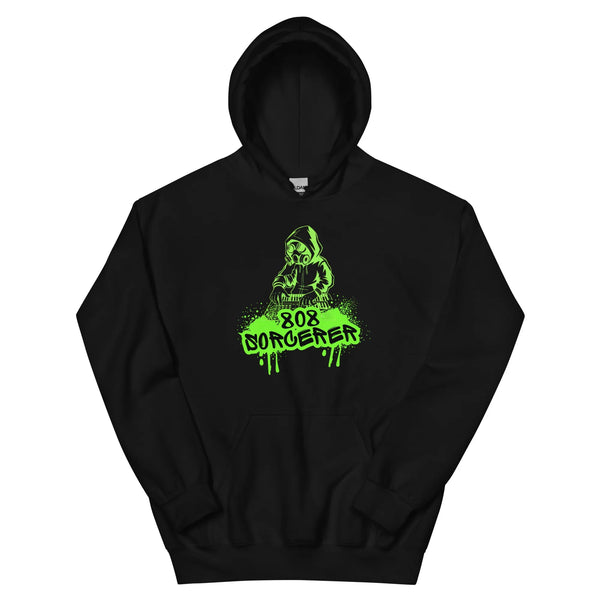
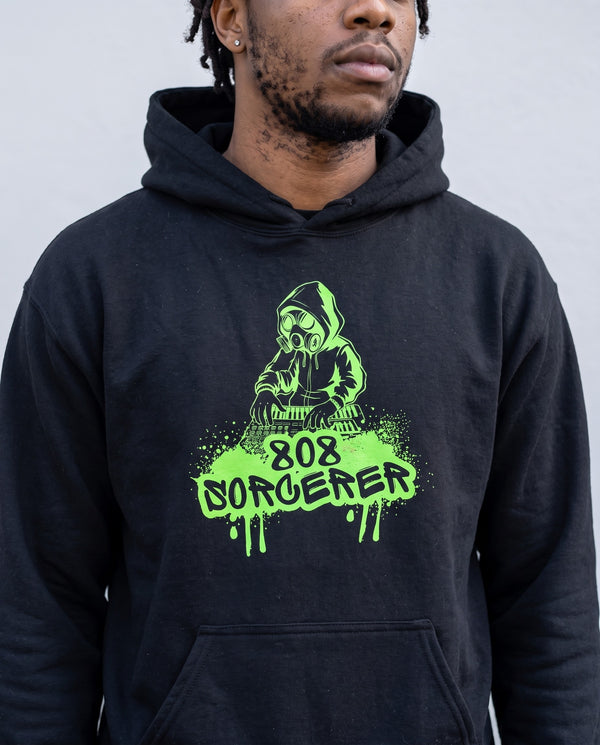
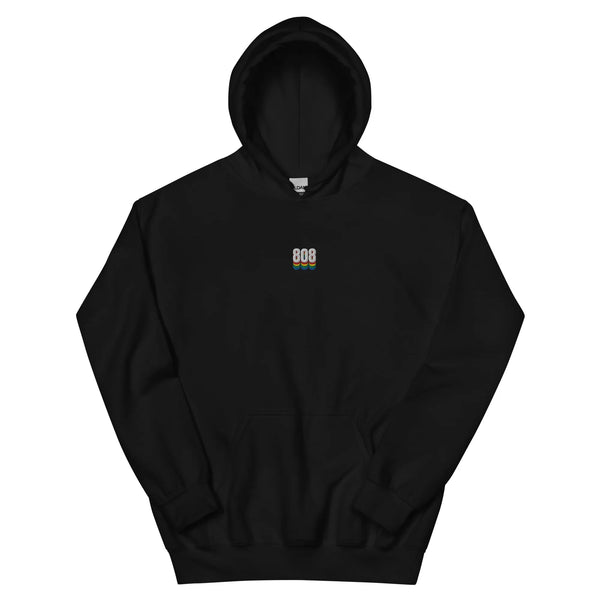
- 808 Embroidered Hoodie: the sound that built modern rap, stitched rather than printed, so it ages the way the graphics section above says a piece should.
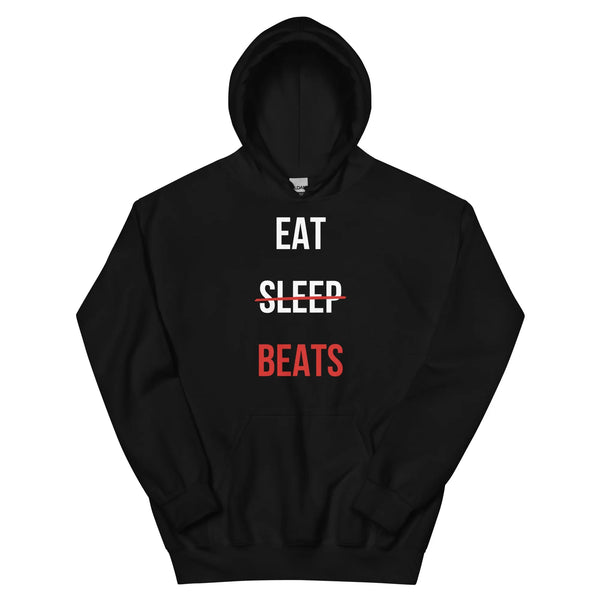
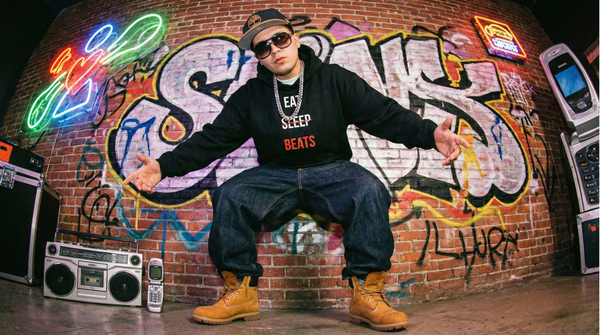
- Eat Sleep Beats Hoodie: the grind, not the fame. The inside joke lands hardest with the people who live it.
- Hustle Heavyweight Tee: the warm-weather layer, in a relaxed fit. Garment-dyed 6.1 oz cotton, clean high-chest embroidery.


Hoodies are $49.99, tees $34.99, and shipping is free to every country we ship to. The full range lives in the hip hop hoodies collection and outfits for rappers.
The three we make
The pieces named above, from our own line. Pick a color and size and add straight to cart.


Swipe for more →
Rapper Sweatshirt FAQ
What sweatshirts do rappers actually wear?
The names that keep recurring: Champion Reverse Weave for heritage, Fear of God Essentials for the modern boxy silhouette, Carhartt WIP for workwear weight, Stussy for streetwear pedigree, Pro Club when the budget is tight, and vintage tour merch when the goal is owning something nobody else can find.
What GSM should a good rap sweatshirt be?
For a crewneck you plan to live in, 300 GSM and up is the sweet spot, and 400 GSM and up is true heavyweight that holds its shape for years. Anything under 250 GSM is a layering piece rather than a statement piece, and it will go limp inside a season.
Should I size up in a rapper sweatshirt?
Decide on purpose. True to size looks sharp and intentional; one size up gives you the oversized streetwear drape. The only wrong answer is the accidental in-between that looks like you grabbed whatever was left on the rack.
Does Ghostnote make sweatshirts?
No, and we'd rather tell you that than sell you one mislabeled. We make 8 oz midweight hip hop hoodies, tees, beanies and caps. If a crewneck is what you're after, the brands in this guide are where we'd send you.
The Bottom Line
Buy the weight that suits your room, buy a fit you chose on purpose, and buy a graphic that means something to the people who do the work, or no graphic at all. An $80 Champion, a sub-$50 Pro Club, a vintage grail with twenty years of fade on it, or a hoodie from us: the right one becomes the piece you reach for without thinking. Skip the fan merch. It was never about wearing somebody else's name anyway.
Wear it
The pieces this guide is built around. Every one ships free, no minimum.