
Gifts for Beatmakers (2026): 24 Ideas for the Person Who Makes Beats

The best gifts for beatmakers are cleared samples they can chop without fear, a pad controller they can play with their fingers, a drum kit from a producer they respect, headphones that show them what the 808 is doing, and a hoodie for the 2am session. Beatmakers are not gear collectors. The good gift removes whatever stands between them and the loop. Eat, sleep, beats, repeat is not a slogan to them. It is a description of the week.
Disclosure: we make studio apparel, and four of the twenty-four ideas below are ours, flagged in one section. The other twenty we do not sell and earn nothing from. No affiliate links. September 2026.
If you are reading both guides
This page is for someone whose job ends when the instrumental is exported: drums, samples, the cook-up, selling the beat. Our gifts for music producers guide is for someone who takes a song through an artist, an arrangement and a mix, so it leans on monitors, MIDI keyboards and DAW licenses. If they record other people, read that one instead.
What to wear it with
Four pieces that match what you are reading. Free shipping, no minimum, 14 day returns.


How to tell you are buying for a beatmaker (read this first)
Producer, beatmaker and engineer get used interchangeably by everyone except the people doing the jobs. Three tells sort it out:
- They say "cook up." Not write, not record, not track. Cooking up is starting an instrumental from nothing, late and alone. It describes a session with no artist in it.
- They talk in BPM, drums and samples. Tempo, swing, where the hi-hats land, which loop got chopped. Somebody talking about mic placement is an engineer wearing the same hoodie.
- They sell beats, or want to. A store link in the bio, a tag on every export, a folder of untitled WAVs.
Still unsure? Our breakdown of beatmaker vs producer vs engineer sorts it out. Otherwise use the decoder: take what they said last week, find the row, buy the thing.
| What they say | What it means | What to buy |
|---|---|---|
| "I'm about to cook up" | Starting an instrumental from scratch tonight, alone | Raw material: a sample subscription (#6), a drum kit (#7), the beanie (#3) for the cold room |
| "I found a crazy dig" | They hunt old records for a sample nobody has flipped | A Tracklib plan (#5), a record from that era (#8), a portable turntable (#9) |
| "Everything I make is in FL" | FL Studio is their home and they are not moving. Ever | A pad controller that plugs into it (#11 or #12), never a different DAW |
| "I need to get on an MPC" | They want to make beats standalone, away from the laptop | An Akai MPC One+ or MPC Live II (#10), or a finger-drumming course first (#14) |
| "I'm trying to sell beats" | They want a storefront, a tag and contracts that hold up | A BeatStars year (#19), distribution (#20), a USB mic for tags (#21) |
| "My 808s aren't hitting" | They cannot hear the low end, so the sub is guesswork | Closed-back headphones with low-end extension (#15) |
The beatmaker's uniform, from our own line (1 to 4)
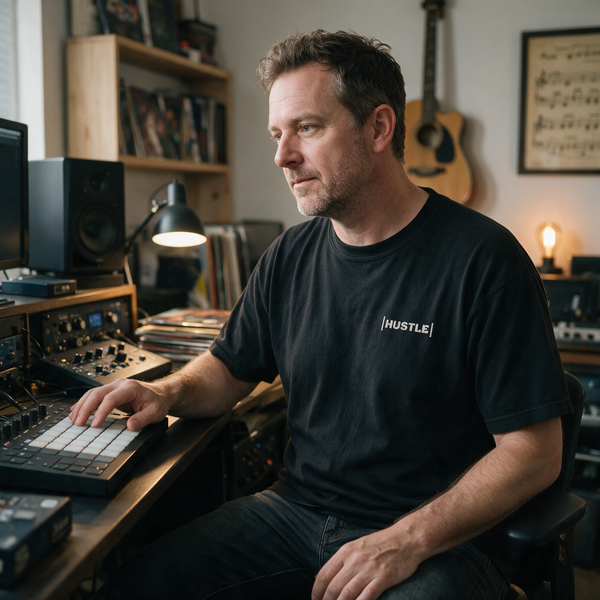
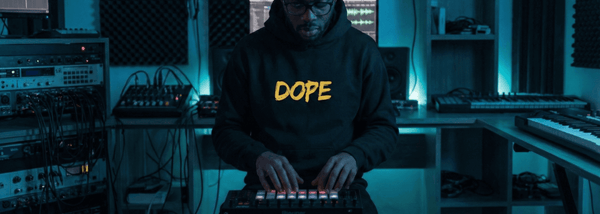
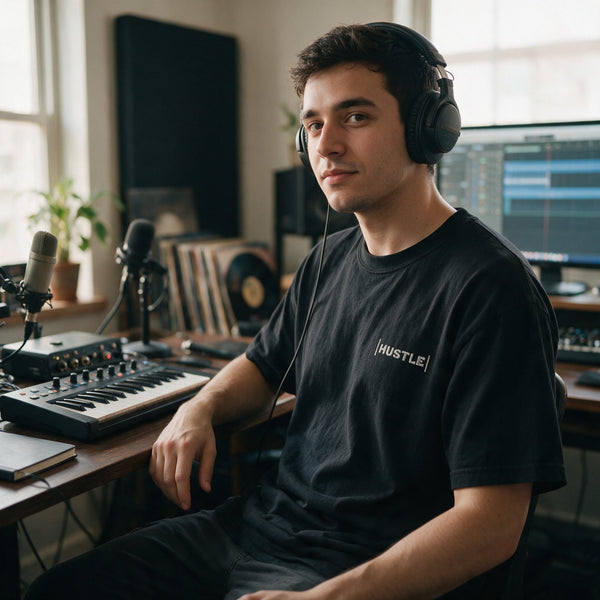
Bedrooms run cold, sessions run to 4am, and the graphic on the chest is how a beatmaker says what they do without saying it. More in the beatmaker's uniform and the best hoodies for music producers. For a trap beatmaker, the 808 collection puts the sound itself on the chest. The hoodie runs S to 3XL, the tees up to 2XL, and the hoodie is a classic unisex fit, so order their usual size.
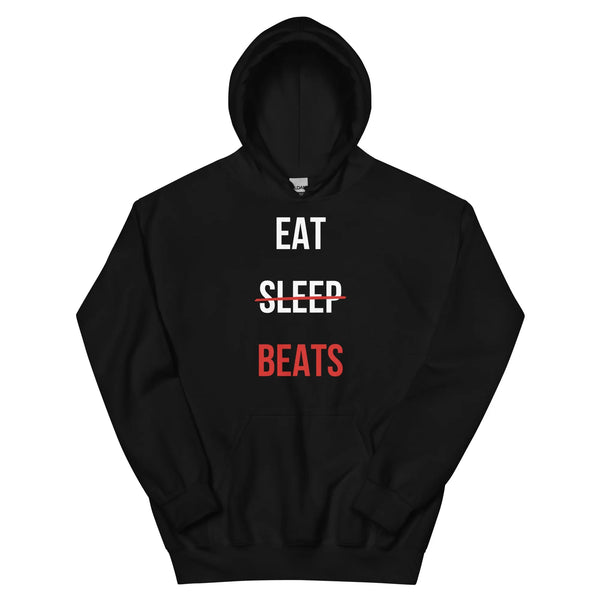
1. Eat Sleep Beats Producer Hoodie ($49.99)


The creed, printed. The Eat Sleep Beats Producer Hoodie is 8.0 oz/yd² (271 gsm) midweight 50/50 cotton-poly fleece, double-lined hood, pouch pocket, quarter-turned body so no crease runs down the graphic. Black, navy, gray and beige. The safest gift here if you know nothing about their setup. To compare it with the other hoodies built around making beats, see our beatmaker hoodies.
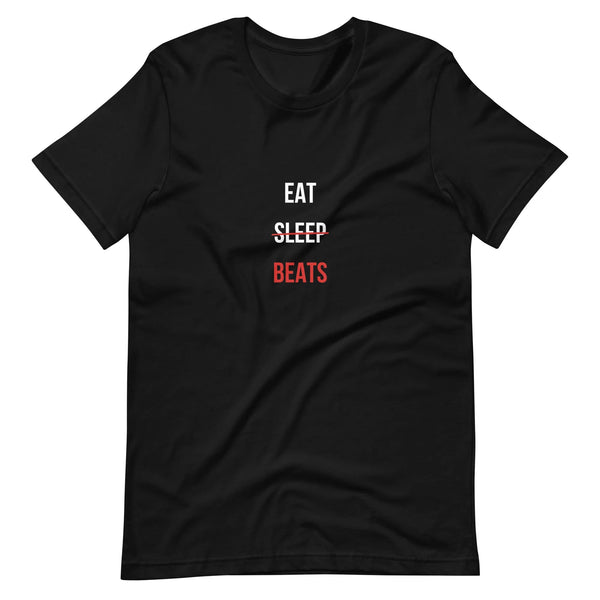
2. Eat Sleep Beats Tee ($34.99)

Same four words, summer weight. The Eat Sleep Beats Tee is 4.2 oz/yd² (142 gsm) combed ring-spun cotton, pre-shrunk and side-seamed, black or navy, XS to 2XL. Layers under the hoodie in winter, replaces it in July.
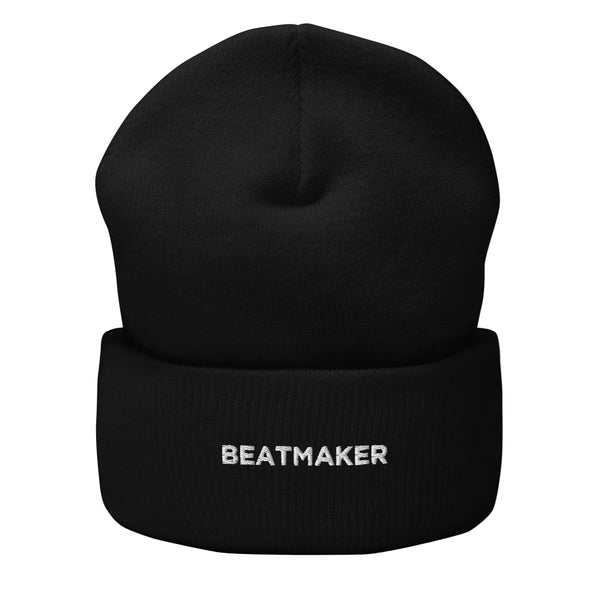
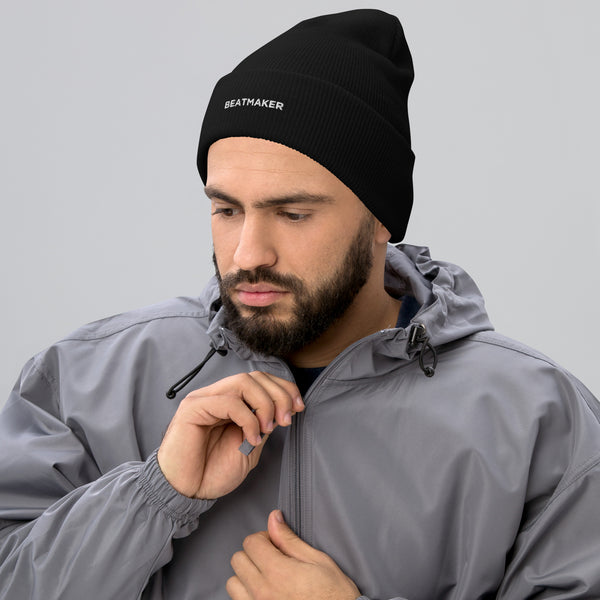
3. Beatmaker Cuffed Beanie ($29.99)

One word embroidered on the cuff of a black knit. The Beatmaker Cuffed Beanie is one size, hand washable, and sits flat under headphones for hours. Zero sizing risk, and the easiest thing here to post.
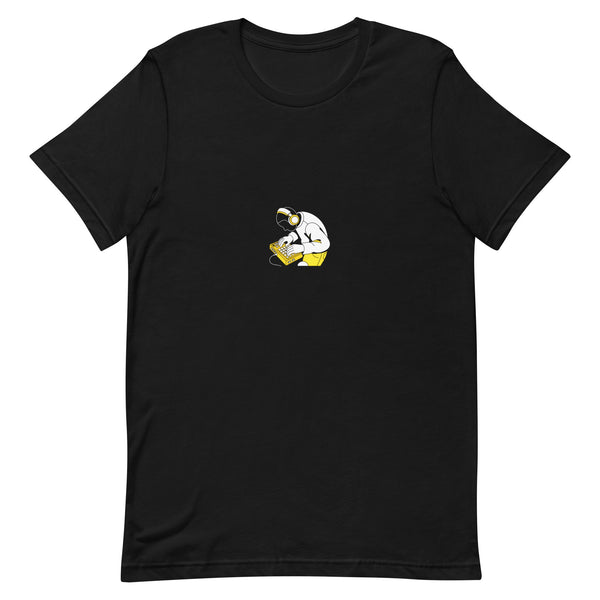
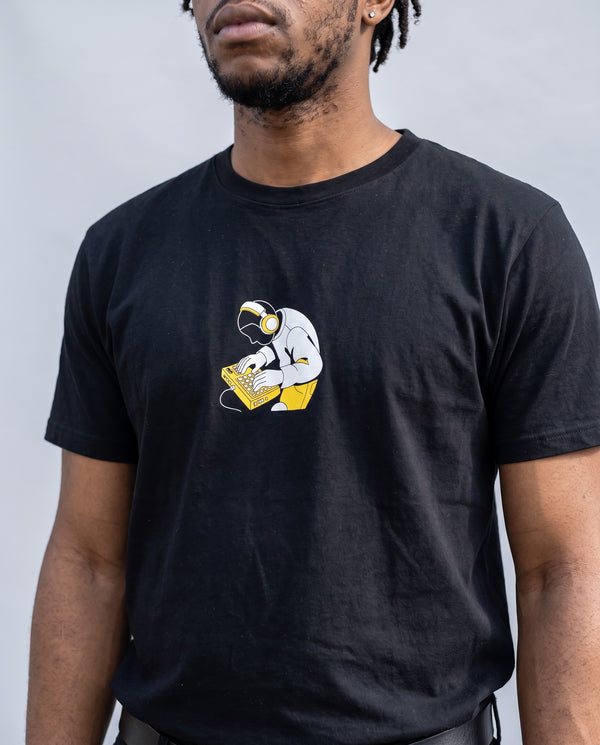
4. MPC Fingers Beatmaker Tee ($34.99)

A head-down figure tapping a pattern out by hand. The MPC Fingers Beatmaker Tee is a Bella + Canvas 3001 Unisex Staple blank, lightweight 142 gsm combed ring-spun cotton, upper-chest DTG print. Buy this one for the finger drummer.
The source: samples and digging (5 to 9)
Every beat starts with raw material, and this is where the money lands best.
5. A Tracklib subscription, for samples they can clear (around $10 to $15 a month)
Sampling a record you do not own is the oldest problem in the craft. Tracklib is a catalog of over 100,000 songs where, in its own words, "the licensing is pre-cleared and included in all our plans," because "terms are agreed with the rightsholder before a record enters the catalog." Plans carry monthly download credits, so a beatmaker sitting on beats they cannot release gets to put them out.
6. A sample subscription that auditions in key ($8 to $22 a month)
Loopcloud lists over 5 million sounds across three tiers (Artist $7.99, Studio $11.99, Professional $21.99 a month). The part that matters is the preview: you can "preview any sound in time and key with your DAW" and "auto-transpose any sound to the key of your project." Auditioning a loop against the beat before it lands removes the part of digging that kills momentum.
7. A drum kit from a producer they respect ($20 to $100)
Generic drum packs get downloaded and forgotten. A kit with a name on it gets used, because the beatmaker knows how those drums sound on records. !llmind's BLAP KITS are the reference point, sold as "innovative loops & drum kits" individually or as a bundle. Check who they follow: the name matters more than the file count.
8. A record from the era they chop, or a record-store gift card ($15 to $60)
If they dig, buy vinyl. Find out which decade and genre they pull from, walk into an independent shop and ask for soul, library music or jazz-funk from that window, or hand them a gift card to that shop. Buy for the sample, not the sleeve, because a beatmaker will flip a scratched copy happily.
9. A portable turntable built for digging ($100 to $150)
The Numark PT01 Scratch keeps showing up in record shops and at flea markets. Numark lists a built-in speaker, "33 1/3, 45 and 78 RPM settings," a hard case with a handle, an adjustable scratch switch for either hand, and a "class-compliant USB connection for PC recording." It plays a record in the shop and digitizes it at home.
The hands: pads and finger drumming (10 to 14)
Drums programmed with a mouse sound like it. Everything here gets the pattern in through fingers instead, which is where swing comes from.
10. A standalone MPC ($700 to $1,300)
The Akai MPC One+ runs with no computer: Akai lists a 7-inch 1280x800 multi-touch display, 16 velocity-sensitive RGB pads and 16 GB of onboard storage. The MPC Live II adds speakers and a rechargeable battery Akai rates at up to six hours, turning the couch into the studio. Buy this only if they have said the word MPC out loud.
11. Akai MPD218, the cheap way in (~$100)
The gateway to finger drumming. Akai's MPD218 is a USB pad controller with 16 thick MPC-style pads across three banks and six assignable knobs that reach 18 parameters. It is bus powered down the one USB cable and class compliant, so there are no drivers to install and no power supply to lose.
12. Novation Launchpad Mini ($120 to $140)
Novation lists 64 pads, 81 RGB LEDs and USB bus power, with Ableton Live Lite and 40 Melodics finger-drumming lessons in the box. The 8x8 grid is for the beatmaker who performs beats rather than only exporting them, so if they post clips of themselves playing live, this is the pick.
13. Native Instruments Maschine Mikro ($150 to $250)
Maschine Mikro is 16 pads plus what NI calls a "dual-touch Smart Strip" for bending sounds, strumming instruments and NI's Perform FX, bundled with the Maschine software and a Komplete Select edition. It needs a laptop. Pick it over the MPD218 if they want a whole workflow rather than a controller.
14. A finger-drumming course ($10 to $20 a month)
Melodics teaches pads, keys and electronic drums across more than 1,200 lessons and 170 courses, with a seven-day free trial, and works with Akai MPD, Maschine and Launchpad hardware they may already own. Playing a pattern in one take instead of drawing it gets a different feel from the same drum kit.
The room and the session (15 to 18)
15. Closed-back headphones with low-end extension ($200 to $320)
The beatmaker pick is the beyerdynamic DT 700 Pro X: closed-back, 48 ohms, a quoted 5 to 40,000 Hz response, and beyerdynamic's claim that at that impedance the PRO X reproduces sound "on all playback devices," so it runs off a laptop without a separate amp. The DT 770 Pro in 80 ohm is the cheaper sibling at around $200.
Why this differs from the producer pick: our producer guide recommends flat, neutral headphones for mix decisions. A beatmaker is not mixing yet. They are deciding whether an 808 is the right note, on a couch at midnight with no interface plugged in. Isolation and honest sub-bass beat neutrality there.
16. An audio interface with loopback ($120 to $160)
The Audient EVO 4 is a 2-in, 2-out interface with 58 dB of mic gain and Smartgain, which Audient says "uses advanced peak analysis to automatically analyse, adjust and set your gain to the perfect levels" in under twenty seconds.
Why this differs from the producer pick: the producer guide points at Focusrite Scarlett and SSL interfaces, chosen for preamp quality when recording a singer or a band. A beatmaker records a tag or a reference hook occasionally and uses the headphone output the rest of the time. Loopback is the beatmaker feature: it records the computer's own audio, so a reference track goes in without a cable.
17. A dimmable desk lamp or monitor light bar ($60 to $130)
Beat rooms are dark on purpose. A BenQ ScreenBar clamps to a monitor, runs on USB, offers 15 brightness levels and 8 color temperature choices from 2700K to 6500K, and lights the desk "without causing any reflective glare on the screen." Nobody buys this for themselves and everybody keeps it.
18. Musician's earplugs ($25 to $40)
Beat-making is loud in a way mixing is not, because the 808 gets turned up when it feels good. Loop Experience 2 plugs filter noise by 12 dB (NRR) and are designed so "music stays clear, but at a safer volume," with four ear tip sizes.
The beat business (19 to 22)
Most beatmakers are running a small business whether they call it that or not. These four are the least romantic ideas here.
19. A year of BeatStars (~$20 a year and up)
BeatStars gives a beatmaker a storefront, a player and a checkout without building anything. Its Starter membership runs $19.99 a year with unlimited MP3 and WAV uploads and 0% commission, and BeatStars states that "all sellers on BeatStars keep 100% of their music sales using PayPal." A year of it turns a folder of untitled WAVs into a shop.
20. A year of distribution ($25 to $90)
Beat tapes and instrumental albums belong on streaming, and distribution is the boring step that never gets prioritized. DistroKid lists its Musician plan at $24.99 billed annually with unlimited uploads for one artist, and says artists "keep 100% of earnings." A year of releases on streaming, for the price of a tee.
21. A USB mic for producer tags ($80 to $120)
Every beatmaker needs a voice on their tag and most record it on a phone. The RODE NT-USB Mini is a USB condenser with an "in-built pop filter," a magnetic desk stand and "zero-latency headphone monitoring," class compliant so it needs no drivers. It handles the tag, scratch hooks and melody voice memos at 3am.
22. A beat license contract pack ($0 to $100)
The scariest gap in most beat businesses. Airbit builds contracts into the store: unlimited uploads, "0% commission on all stores," custom licenses, co-producer splits, and it says "every purchase is legalized with an electronically signed contract from both parties." A platform that issues the paperwork beats a PDF template, and if they already sell, put the money toward an hour with a music lawyer instead.
The brain: books and theory tools (23 to 24)
23. Dilla Time by Dan Charnas ($18 to $30)
The one book to buy a beatmaker. Dilla Time, published by MCD in 2022, is about J Dilla and, in the publisher's framing, "a new kind of musical time-feel that he created on a drum machine, but one that changed the way 'traditional' musicians play." It builds the rhythm concepts with graphics, so it teaches as well as tells. Give it to anyone who has argued about quantize.
24. A music-theory tool for people who do not read music ($50 to $100)
Beatmakers hit a wall at melody far more often than at drums. Scaler, now at version 3, builds in-key progressions and voicings, and the companion Scaler Detector reads "keys, scales and chords from audio or MIDI," the feature that matters when the sample came first. We compared the field in our guide to the best music theory plugins, free DAW tools included.
What not to buy a beatmaker
Five ways this goes wrong:
- A DAW. They married one years ago. Buying an FL Studio person an Ableton licence is not an upgrade, it is homework.
- Studio monitors for an untreated bedroom. Speakers in a small square room with bare walls make the low end lie, the one thing a beatmaker cannot afford. Headphones first.
- Generic music-note gifts. Treble-clef socks, piano-key mugs, "music is life" wall art. None of it points at what they do.
- Sample packs in the wrong genre. A drill producer has no use for an EDM festival pack. If you do not know the genre, buy credits and let them choose.
- An MPC for an FL person. Standalone hardware is a different way of working, not a better one. An expensive box that stays boxed is the worst outcome here.
How to check: look at the desk in their last video and at what their store page lists. Two minutes tells you their DAW, their controller and whether they sell beats, enough to pick a row of the decoder. If you get nothing, buy consumable or wearable.
Quick picks by budget
| Budget | Best beatmaker picks |
|---|---|
| Under $30 | A Beatmaker beanie ($29.99), a used record from the era they chop, one BLAP kit, a month of Loopcloud Artist |
| $30 to $100 | The Eat Sleep Beats tee ($34.99) or MPC Fingers tee, an Akai MPD218, Loop earplugs, a DistroKid year, a BeatStars Starter year, Dilla Time |
| $100 to $300 | The Eat Sleep Beats hoodie ($49.99), Launchpad Mini, Audient EVO 4, DT 770 Pro, Maschine Mikro, Scaler, a year of Melodics |
| $300 and up | Akai MPC One+ or MPC Live II, a year of Tracklib plus a budget for records, or studio time booked and paid for |
Ordering for the holidays
Digital gifts here arrive instantly however late you leave it: a Tracklib, Loopcloud or Melodics subscription, BeatStars, DistroKid, a drum kit, Scaler. Hardware from other retailers depends on their own cutoffs, so check before mid-December. For apparel from our line, order early. Most orders arrive in 4 to 14 days, depending on your location. The hoodie is a classic unisex fit, so their usual size is the safe pick.
FAQ: gifts for beatmakers
What is a good gift for a beatmaker?
The reliable categories are raw material, hands and identity. Raw material means samples they can clear and drum kits with a name attached: Tracklib credits, a Loopcloud subscription, a kit from a producer they follow. Hands means a pad controller they can finger-drum on, from around $100 with an Akai MPD218. Identity means studio apparel that references beat-making rather than music in general. Core gear like a DAW or monitors is where gifts go wrong.
What is the difference between a gift for a beatmaker and a gift for a music producer?
A beatmaker's job ends when the instrumental is exported, so their gifts point at making the next beat faster: samples, drums, pads, a store to sell from. A producer takes a song through an artist, an arrangement and a mix, so their gifts point at recording and finishing: MIDI keyboards, monitors, interfaces with good preamps, DAW licenses. Only two categories overlap cleanly, closed-back headphones and an audio interface, and even those get picked differently. Our gifts for music producers guide covers that side.
What should I get someone who makes beats in FL Studio?
Hardware that plugs into FL, never a different DAW. An Akai MPD218 or a Novation Launchpad Mini both connect over USB and map to FL Studio in minutes. Sample subscriptions, drum kits and Tracklib credits are DAW-agnostic, so they are safe too. FL Studio users are among the most loyal in music, and switching them is not a gift.
Are hoodies and beanies good gifts for beatmakers?
Yes, and for a practical reason before a stylistic one. Beat-making happens in cold bedrooms at night, in sessions that run past when the heating goes off, so a midweight hoodie is working clothing. A cuffed beanie sits flat under headphones, which is why it gets worn most. The one rule is the graphic: it has to reference beat-making, drum machines or 808s, not a generic music note.
What do you get a beatmaker who already has everything?
Buy them permission and time rather than more gear. A year of Tracklib means the beats sitting on their drive with uncleared samples can finally be released. A rare record from the era they dig in is one sample nobody else has. Studio time booked and paid for, or an engineer to mix their beat tape, moves work over the line that gear never will.
More gift guides from Ghostnote
Shopping for somebody else? See our gifts for music producers, gifts for audio engineers and gifts for rappers.
Wear it
The pieces this guide is built around. Every one ships free, no minimum.