
The Best Hoodies for Music Producers in 2026: A Buyer's Guide

A music producer hoodie is gear, not a fashion accessory. You live in it through ten-hour sessions, pull the hood up when the mix needs your full attention, and roll into a cold control room at 2am knowing it will hold the warmth. The best hoodies for music producers earn their place the same way a good pair of monitors does: by performing every day without asking for anything back. This is a buyer's guide to the hoodies that survive the studio: what separates a keeper from a throwaway, plus fifteen picks across every budget. For the all-Ghostnote version, see the top 10 producer hoodies.
Full disclosure before we start: we're Ghostnote, and we make producer apparel. Exactly one section below is our own stuff, clearly labeled near the end. Every other hoodie in this guide is from a brand we don't sell and earn nothing from. No affiliate links anywhere in this article.

What Makes a Great Studio Hoodie
Most hoodies are built for a walk to the coffee shop. A studio hoodie is built for the chair. The difference shows up in the details: a hood that sits right so it does not bunch against headphones, sleeves that do not ride up when your hands are on the keys, and a neckline that holds its shape after a hundred washes. You want something that disappears once you put it on, leaving you free to think about the eight-bar loop instead of the fabric.
Four specs decide everything: fabric weight, fiber content, cut, and how the graphic is applied. Get those right and you have a piece you reach for on instinct. Get them wrong and it ends up at the bottom of a drawer, worn once for a video and never again. Here is how to read each spec, then the picks.
Fabric Weight: Read the GSM Before the Logo
Fleece weight is quoted in GSM (grams per square meter) or in ounces per square yard. Multiply ounces by roughly 34 to convert, so 8 oz is about 271 GSM and 14 oz is about 475. Under 250 GSM is light French terry: fine for summer, thin under AC. Roughly 250 to 350 GSM is midweight, which is what most studio fleece is, including ours. 400 GSM and up is heavyweight, and that is the cold-room zone.
Studios run cold. Engineers keep control rooms low to protect the gear and the ears, and you feel it once the adrenaline of the session wears off. A thin hoodie leaves you reaching for the thermostat. A heavyweight one holds heat and holds shape, so it still looks sharp after months of daily wear, and it reads better on camera: if you film beat breakdowns, dense fabric drapes with a structure that thin fleece cannot fake. There are trade-offs, though. Heavyweight fleece takes a day to dry, costs more to ship, and cooks you in a room you can actually heat. If your space runs warm, or you layer a thermal underneath, a midweight around 270 GSM is the better tool and not a compromise. Either way, own two and rotate.
Cotton vs Blends: The Laundry-Proof Question
All-cotton fleece feels best and breathes best, but it shrinks if you tumble-dry it hot. Wash cold, dry low, or size with shrinkage in mind. An 80/20 cotton-poly blend trades a little softness for shape retention that survives lazy laundry habits, which is why so many workhorse hoodies use it. Loopback (French terry) is the lighter, unbrushed construction for warm rooms; brushed-back fleece is the warm one. Garment-dyed pieces fade into character; if you want crisp black forever, buy a blend and wash it like you mean it.
Fit: Boxy Beats Slim for Long Sessions
Fit is where comfort and look meet. Too tight and your shoulders fight the seams every time you reach for a fader. Too loose and the excess fabric pools in your lap and snags on everything. The sweet spot for most producers is a relaxed, slightly boxy cut with a dropped shoulder, roomy enough to layer a tee underneath in winter, clean enough to wear out without changing.
Pay attention to the hood and the cuffs. A structured hood stays up on its own, which matters when you want to block out the room and lock into a part. Ribbed cuffs keep the sleeves where you put them instead of slipping down over your wrists mid-take. These are small things until you spend twelve hours in the thing, and then they are everything.
Print vs Embroidery: What Survives a Hundred Washes
How the graphic is applied decides how the hoodie ages. Screen prints sit on top of the fabric: washed cold and inside out they last years; run through a hot dryer they crack like a dry riverbed. Direct-to-garment prints feel softer but fade sooner. Embroidery outlasts the garment itself and adds a little structure, which is why quality brands keep chest hits small and stitched. And if you have ever printed your own merch, you already know the blanks game: AS Colour heavyweights are what half the merch tables you have ever seen are printed on, and they make a fine plain studio hoodie in their own right.
The Best Hoodies for Music Producers in 2026
Grouped by what they are for. Prices are rounded street prices and drift with sales and colorways.
The Heavyweight Benchmarks ($60–$100)
1. Champion Reverse Weave (~$60–$90)
The reference point. Champion started cutting its fleece cross-grain in the late 1930s so sweatshirts would stop shrinking short, added expansion gussets, and has barely needed to touch the design since. The patent ran out generations ago and the industry has been copying it ever since. Around 12 oz, boxy, nearly indestructible.
2. Los Angeles Apparel 14 oz Heavy Fleece ($70–$90)
Fourteen ounces is roughly 475 GSM, about as heavy as hoodies get without becoming outerwear. Garment-dyed, sewn in South Central LA, boxy as a road case. The Los Angeles Apparel 14 oz is the one producers keep recommending to each other, and the recommendation keeps being right.
3. Camber Cross-Knit Pullover ($70–$100)
Made in Pennsylvania to workwear specs, and it shows. The Camber cross-knit is the tank of the category: heavier than it looks, warmer than it should be, and likely to outlive your current DAW and the next one.
4. House of Blanks Heavyweight (mill-direct)
House of Blanks is a Toronto knitting mill selling its own heavyweight fleece straight to you. No middle brand, no story markup. Plain, dense, honest. The pick for producers who want the weight without wearing anyone's logo, including ours.
The Studio-to-Street Tier ($90–$150)
5. Carhartt WIP Chase Hoodie ($100–$140)
Dense cotton-poly fleece with the small embroidered C. Workwear DNA with streetwear fluency. The Carhartt WIP Chase is the hoodie you wear to the session and then to the label meeting without thinking about it once.
6. Fear of God Essentials Hoodie ($90–$120)
The template for the boxy, dropped-shoulder, muted-palette silhouette half the industry now wears. Fear of God Essentials is what "quiet flex" looks like on camera. If your content leans clean and tonal, this is the uniform.
7. Stüssy Basic Hoodie ($110–$140)
Stüssy has been the default streetwear hoodie since hardware samplers were cutting-edge, and the basic logo hoodie still earns the spot: solid weight, correct fit, a logo that says culture without saying try-hard.
8. Nike Tech Fleece ($120–$150)
The outlier. Nike Tech Fleece is lighter and more engineered than everything else here, with zip pockets that actually hold a phone and a dongle. Wrong for a cold control room, exactly right for flights, load-ins and festival season.
The Buy-It-Once Tier ($100–$180)
9. Reigning Champ Midweight ($140–$180)
Made in Canada with flatlock seams and the cleanest construction in the category. A Reigning Champ hoodie carries no graphic at all, which after a certain point is its own kind of statement.
10. American Giant Classic ($100–$140)
American Giant built an entire company on one obsessively engineered, US-made hoodie. Heavy fabric, reinforced construction, replaceable-part mentality. The full-zip is the famous one; pullover people are also covered.
The Budget Workhorses ($25–$50)
11. Russell Athletic Dri-Power ($25–$40)
From the company that invented the sweatshirt in the 1920s. Nothing about the Russell Athletic Dri-Power is precious, which is the point: this is the beater for sessions that involve moving amps, painting the booth, or lending to a vocalist you may never see again.
12. Uniqlo Sweat Pullover Hoodie ($40–$50)
The cleanest cheap hoodie in the game. Uniqlo's sweat pullover has no logo, decent weight, and consistent sizing. The minimalist pick when the budget is going to plugins instead.

From Our Own Line: Producer Hoodies We Make ($49.99)
This is the one section where we're selling our own stuff. We make these. Skip it freely, or read on if you want the graphic to mean something.
Everything above nails weight and cut. What none of it does is say anything to the people who know. That is the lane we build for: designed by makers, for makers, never printed for fans. Marks that nod to the work itself, from the late nights and the loops to the chase for the right sound. Subtle enough to earn a double take instead of shouting for one. On the spec side: 8.0 oz/yd² fleece, about 271 GSM, in a 50/50 cotton-poly blend, graphics kept small and printed or embroidered to survive daily wear, and free shipping on all of it, to every country we ship to. That is midweight, not heavyweight, and it is a deliberate pick. The benchmarks above are the ones to buy if your room stays cold all day. Ours are built for a room you can heat, where a 475 GSM slab is too much by hour two, and the polyester half is what keeps the shoulders square through lazy laundry.
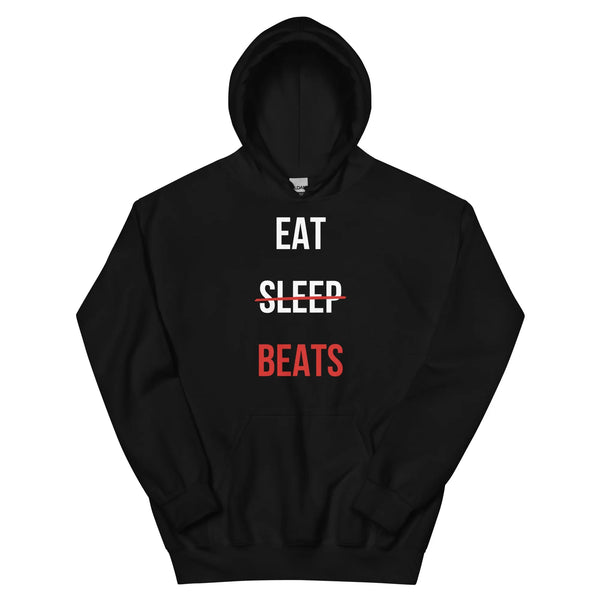
13. Eat Sleep Beats Hoodie

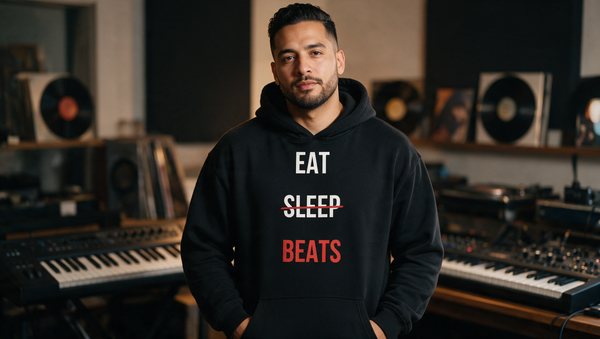
The schedule you already keep, stated as fact. The Eat Sleep Beats hoodie is our flagship producer piece, the graphic another beatmaker clocks across the room and answers with the nod.
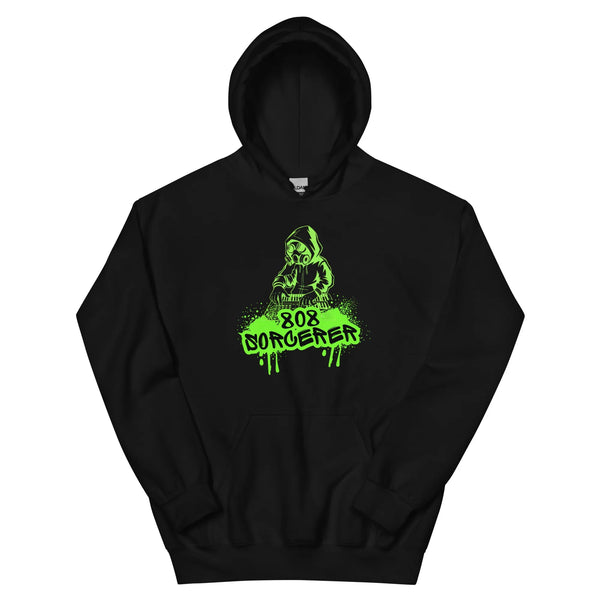
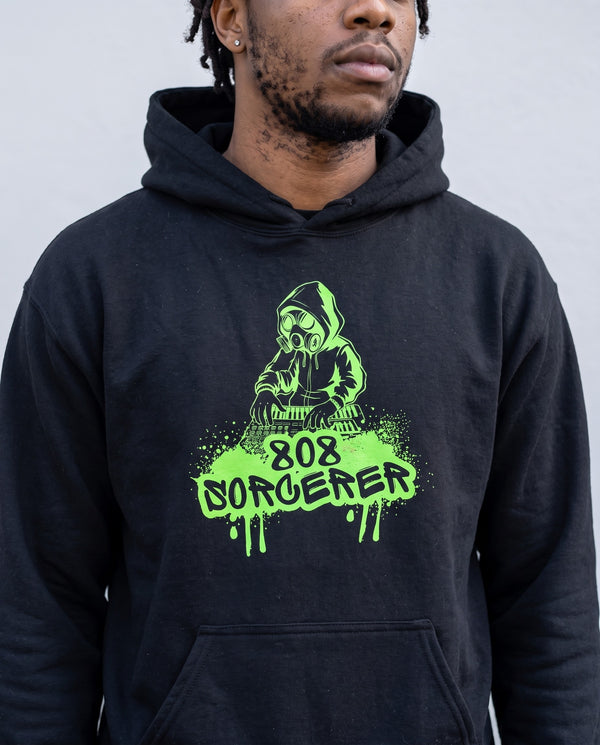
14. 808 Sorcerer Hoodie

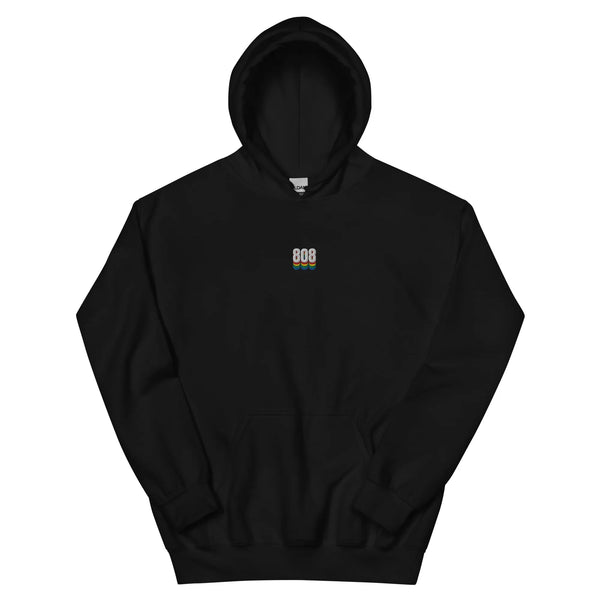
For the low-end obsessives. Anyone who has spent an hour tuning a kick will read the 808 Sorcerer hoodie instantly; everyone else will just think you dress well. Both outcomes are correct.
15. FL Gang Premium Hoodie

DAW allegiance, worn openly. The FL Gang premium hoodie is for the FL Studio loyalists who know the loudest debates in music are not about music. Cotton-face fleece, clean chest hit.
The rest of the range, including embroidered 808 pieces, lives in the music producer hoodies collection. If you work the other side of the glass, the audio engineer hoodies speak your dialect.
The three we make
Our own producer hoodies, $49.99 each. Pick a color and size and add straight to cart.


Swipe for more →
Build a Rotation, Not a Museum
One great hoodie is a start. A rotation is the goal. The math is simple: two hoodies you trust, a couple of tees underneath, and one layer that carries you from the booth to the street without a costume change. That way one is always clean and ready while the other dries, and you never get caught reaching for something thin on a cold night.
Stick to a tight palette (blacks, charcoals, faded earth tones) and everything layers with everything. That restraint is what keeps a studio wardrobe looking intentional instead of random. It works like a signal chain: every piece feeds the next, and the result is bigger than any one part. The producer outfit collection shows how we would wire it.
Quick Picks by Budget
| Budget | Best Picks |
|---|---|
| Under $50 | Russell Athletic Dri-Power, Uniqlo Sweat Pullover, Ghostnote Eat Sleep Beats (above) |
| $50–$100 | Champion Reverse Weave, Los Angeles Apparel 14 oz, Camber Cross-Knit |
| $100–$150 | Carhartt WIP Chase, Fear of God Essentials, Stüssy Basic, American Giant Classic, Nike Tech Fleece |
| $150+ | Reigning Champ Midweight, the one you will still own in ten years |
FAQ: Hoodies for Music Producers
What hoodies do music producers actually wear?
Heavyweight, boxy, dark. In real studios you mostly see staples like Champion Reverse Weave, Carhartt WIP, and Essentials, plus craft-specific graphics that signal to other producers. The common thread is fabric that survives daily wear and a fit that does not fight headphones. For how the whole fit comes together, the producer outfits collection is our version of the answer.
What GSM should a studio hoodie be?
400 GSM or more for a properly cold control room; 250 to 350 if your space runs warm or you layer heavily. Under 250 GSM is a t-shirt with a hood.
Hood over the headphones, or headphones over the hood?
Hood over the headphones. Pull the hood up after the cans go on and the pads keep their seal on your ears. Put headphones on over the hood and the fabric under the pads breaks the isolation on closed-backs. This is also why a roomy, structured hood matters: a tight hood forces the bad order.
How do you wash a printed hoodie so the graphic lasts?
Cold wash, inside out, hang dry. Heat is the killer: hot dryers crack screen prints and shrink cotton. Embroidery forgives almost anything, which is exactly why it is worth paying for on a piece you plan to wear every session.
The Bottom Line
Cold rooms, long sessions and music nobody else has heard yet deserve a uniform built for the work. Buy by the spec sheet: a weight printed in GSM or ounces somewhere on the page, a fiber blend that matches how you do laundry, a relaxed cut, graphics handled with care. Do that and any pick above will hold up session after session. For the deeper wardrobe philosophy, our beatmaker's uniform guide breaks it down from the ground up, and if your lane runs closer to the mic than the MPC, the hip-hop hoodies collection has you covered.
More from Ghostnote
Buying for a producer instead of being one? Start with the gift guide for music producers.
Wear it
The pieces this guide is built around. Every one ships free, no minimum.