
Why Are Recording Studios So Cold?

If you have spent any real time in a recording studio, you already know the feeling. You walk in ready to work, settle in behind the desk, and within twenty minutes you are reaching for something with sleeves. Studios run cold. Almost all of them do, and it is not an accident.
Here is why recording studios are kept cold, and why the hoodie quietly became part of the job.

What to wear it with
Four pieces that match what you are reading. Free shipping, no minimum, 14 day returns.








The gear runs hot
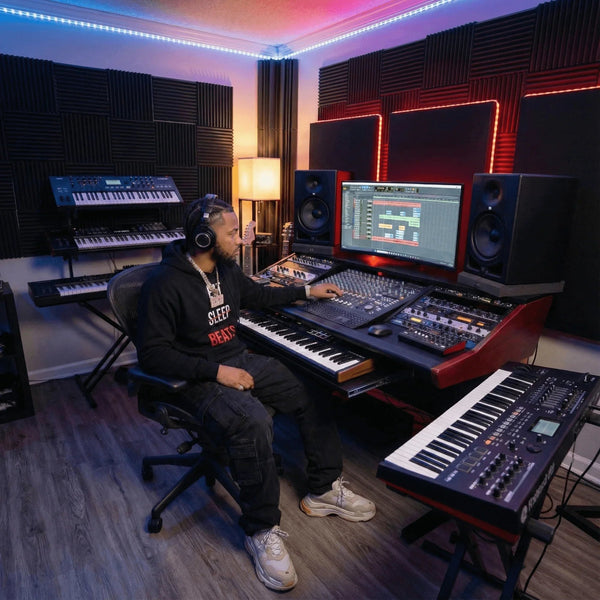
Walk into any serious studio and look at what is running. Outboard racks, power amps, a console, monitors, a computer or two, maybe a wall of synths. All of it throws off heat, and a lot of it. Pack that into a sealed, acoustically treated room with very little airflow and the temperature climbs fast. The air conditioning is there to fight the heat the gear creates, not to keep you comfortable.
Cool gear lasts longer and sounds cleaner
Heat is hard on electronics. It shortens the life of components, and when gear gets hot, internal fans spin faster to cool it down, which adds noise to a room that is supposed to be silent. Keeping the room cool keeps the equipment healthy and keeps fan noise out of your recordings. Engineers protect the gear because the gear is the studio.
A cold room keeps you sharp
There is a human reason too. A warm, still room after eight hours will put you to sleep. A slightly cold room keeps you alert, keeps your ears honest, and keeps the session moving. Producers and engineers learn this fast: the kind of comfort that makes you drowsy is the enemy of a good mix.
So what temperature should a studio be?
Most studios aim for around 68 to 72 degrees Fahrenheit, which is about 20 to 22 Celsius. Plenty run colder than that, especially once the gear heats up and the AC overcompensates. There is no single rule. The goal is to keep the equipment safe and the people awake, and that usually lands on the cool side of comfortable.
Even the home studio runs warm
You do not need a million-dollar control room for this to apply. A bedroom setup with a laptop, an interface, a couple of monitors and a screen or two heats up a small space fast, especially with the door shut for sound. That is why so many home producers crack a window, keep a fan running well away from the mic, and leave a hoodie on the back of the chair. The principle scales all the way down.
This is why the hoodie is studio uniform
Now the practical part. You are sitting mostly still, for hours, in a room that is kept cold on purpose. That is the exact situation a good hoodie was built for. What works is a midweight fleece with enough substance to hold warmth against a body that is barely moving, and enough breathability to sit in for a full night behind the desk.
The hoodie became the unofficial uniform of producers, beatmakers and engineers for a reason: in a cold room, it is the most practical thing you can wear.

Eat Sleep Beats Producer Hoodie · $49.99

Beatmaker Hoodie · $49.99
Our Eat Sleep Beats Producer Hoodie and Beatmaker Hoodie are built for exactly this: an 8.0 oz/yd² (271 gsm) 50/50 cotton-poly fleece with a classic unisex cut that moves with you. That is the weight that works in a room where somebody else controls the thermostat. Go up to 400 gsm and you are wearing a coat indoors: warm at hour one, too warm by hour two, and still damp the next day if you sweat in it. Browse the full hip hop hoodies collection for the rest of the rotation, and if you want the deeper take on why what you wear in the room matters, read why your studio fit matters more than you think.
The rooms that built the sound
Part of studio culture is respect for the rooms themselves. The cold, the gear, the long hours: every classic record came out of a space a lot like the one you work in, just with a bigger name on the door. A few worth knowing:
- Chung King Studios, New York. An unofficial home of golden-age hip hop, where Def Jam built much of its early catalog and the boom-bap sound got its polish.
- D&D Studios, New York. The room behind a huge slice of 90s New York rap, from Gang Starr to Nas. Raw, no frills, all about the work.
- Stankonia, Atlanta. OutKast's own studio and the launchpad for a Southern sound that would go on to reshape all of hip hop.
- Paramount Recording, Los Angeles. A West Coast institution that hosted the Death Row era and decades of rap history.
- Electric Lady Studios, New York. Built by Jimi Hendrix, later a second home for everyone from D'Angelo to a long line of modern rap and R&B artists.
Different cities, different eras, same pattern: the work happens in a quiet, cool room with the right people and a lot of patience.

Frequently Asked Questions
Why are recording studios so cold?
Mostly because the equipment runs hot. Consoles, amps, computers and outboard gear throw off serious heat in a sealed, acoustically treated room, so the air conditioning runs hard to fight it. Cooler rooms also protect the gear, cut down on fan noise, and keep producers and engineers alert through long sessions.
What temperature should a recording studio be?
A common target is around 68 to 72 degrees Fahrenheit (20 to 22 Celsius), though many studios run cooler once the gear warms up. The priority is protecting the equipment and keeping people sharp, which usually means erring on the cool side.
What do producers wear in the studio?
Layers that handle a cold room for hours at a time. A midweight fleece hoodie is the go-to because it holds warmth while you sit still, stays comfortable across a long session, and looks right on camera for content.
Does room temperature affect recording quality?
Indirectly, yes. Hot gear means louder cooling fans and a shorter lifespan for your equipment, and fan noise can bleed into a recording. A cool, quiet room protects both the gear and the take.
Wear it
The pieces this guide is built around. Every one ships free, no minimum.