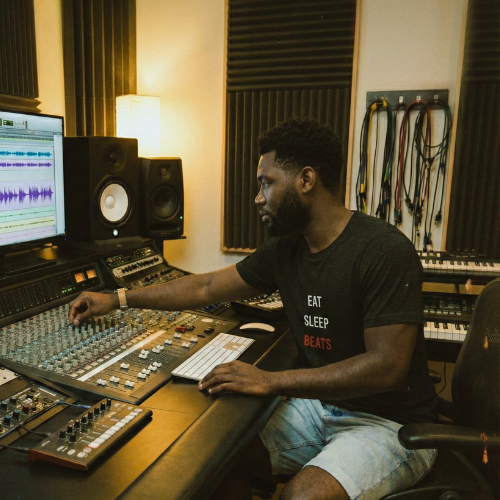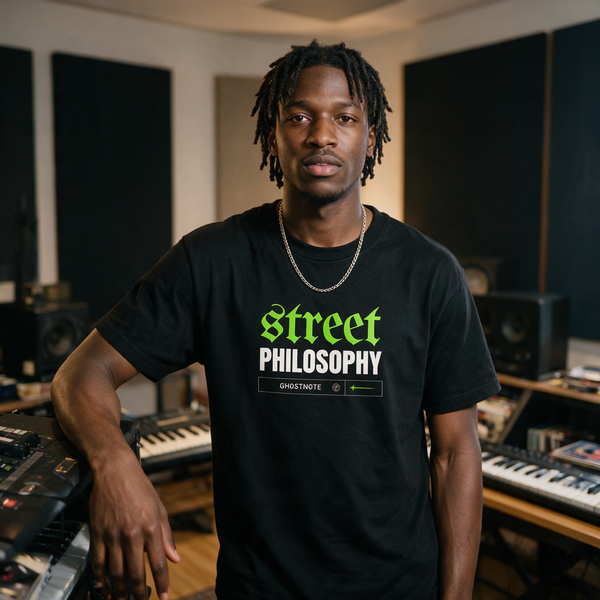

Why Your Music Studio Fit Matters More Than You Think

Walk into any corporate office and you'll see dress codes built around the idea that professional means formal. Walk into a recording studio, any recording studio from a bedroom setup to a Grammy-winning facility, and you'll find a completely different standard. One that most people never think about explicitly, but that every serious producer, engineer and artist navigates every single time they step into a session.
The studio fit has its own logic, its own requirements, and its own culture. And getting it right matters more than it looks like it should.
What to wear it with
Four pieces that match what you are reading. Free shipping, no minimum, 14 day returns.




The Studio Is a Specific Environment
Before the aesthetics, there's the physics. Recording studios are kept cold on purpose. Temperature-controlled environments protect the equipment, reduce the noise floor, and keep engineers focused through long sessions. The average studio runs at 68–72°F (20–22°C). Comfortable for an hour, cold after six. If you've ever sat in a session for four hours and felt your focus deteriorate, there's a good chance it was partly the temperature.
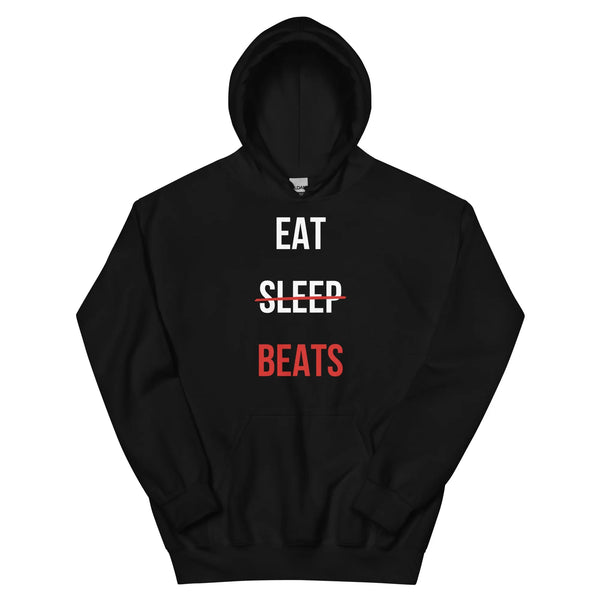
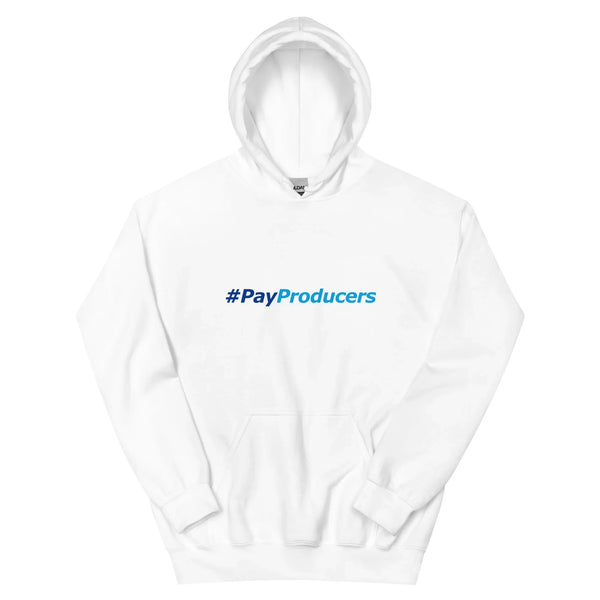
This is why the music producer hoodie has become the unofficial uniform of the studio. It isn't fashion for its own sake. It's a functional response to the physical environment. Midweight fleece, cut with room to move freely at the keyboard, warm enough to stay sharp from 9pm to 6am. The fit that was "just comfortable" turned into the look that became the culture.
Why the Graphic on Your Tee Actually Matters
In a professional setting, what you wear sends a signal before you open your mouth. In the studio, that signal is read very quickly and very specifically by the people in the room. A music producer who shows up in a generic streetwear hoodie reads differently from one who's wearing a piece that references the craft: 808s, their DAW, production culture, the specific language of beatmaking.
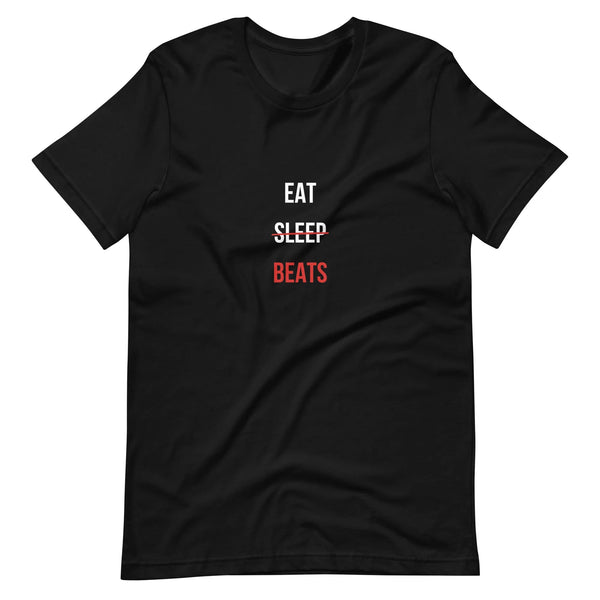
This isn't superficial. It's the same reason lawyers wear suits and chefs wear whites: professional dress signals expertise, belonging, and seriousness. In the studio, the graphic on your hoodie or tee is the equivalent. It says "I'm not here as a spectator — I'm here because this is my world."
One line of lab research points the same way. In a 2012 paper in the Journal of Experimental Social Psychology, Hajo Adam and Adam Galinsky found that people wearing a coat described as a doctor's coat made fewer errors on attention tasks than people wearing the same coat described as a painter's coat, or people who only looked at it (Adam and Galinsky, 2012; full paper, PDF). They called it enclothed cognition: the effect needed the garment and the meaning attached to it, not one or the other. Replication attempts since have been mixed, so take it as a hint rather than a law. A well-chosen studio fit communicates that you've been in enough rooms to know what the room expects.
Comfort Is Not Negotiable for Creativity
Physical discomfort is the enemy of flow states. Production work (and any creative work that requires long stretches of concentrated focus) depends on your physical environment not demanding attention. If your clothes are uncomfortable, part of your brain is always managing that discomfort rather than focusing on the mix.
This is why the best studio wear combines function and intention:
- Weight in the layer, not the tee: studio tees sit around 4.2 to 5.3 oz/yd² (142 to 180 gsm), which is the right base. The warmth is the hoodie's job, and a standard studio fleece runs 8.0 oz/yd² (271 gsm).
- Room over restriction: Tight fits restrict blood flow in the shoulders and arms, exactly where you need freedom when you're reaching across a mixing desk or adjusting hardware.
- Cotton at the skin, blend in the layer: cotton breathes, which is what you want against you for six hours. The standard studio hoodie is a 50/50 cotton-polyester fleece, where the polyester half is what stops it shrinking and losing its shape wash after wash.
The Studio-to-Street Problem
Most producers don't change between a studio session and everything else that surrounds that session: the label meeting, the coffee shop where you're finishing the mix notes, the showcase in the evening. The studio fit needs to work in all of those contexts simultaneously.
This is where the studio fit philosophy becomes interesting. The goal isn't to look "casual" or "dressed up." It's to look intentional. Like you made choices rather than just grabbed whatever was clean. The difference between a producer who looks like they belong in a room and one who doesn't is usually not about price but about specificity.
A graphic tee that references the culture of what you do looks intentional. A generic brand hoodie doesn't tell anyone anything about who you are. At the intersection of comfort, function, and cultural signal is exactly where good studio clothing sits.
Building Your Studio Wardrobe
You don't need much. The studio uniform is built on a small number of pieces that work hard:
- A midweight fleece hoodie: The core layer. Think 8.0 oz/yd² (271 gsm), a classic unisex cut with room to move, with a graphic that references your specific identity in the culture. The music producer hoodies are built around exactly this.
- Two or three graphic tees: The rotation. These are what you wear under the hoodie and what you're left with when the room finally heats up. Each should communicate something specific (your DAW, your craft, your position in the culture). Browse producer tees or hip hop tees depending on your identity.
- A beanie for winter sessions: Studios are cold and acoustic treatment in the ceiling makes hats practical. Something like the Beatmaker Beanie reads correctly without trying too hard.
- Clean, dark bottoms: Joggers or cargo pants that work seated and standing. The focus is on the top half; the bottoms just need to not undermine it.

The Psychology of Dressing for the Session
There's a reason athletes have pre-game rituals, surgeons scrub in with specific protocols, and chefs put on their whites before service. The act of dressing for your role is a signal to your own nervous system: it's time to perform. The studio fit works the same way. Putting on the hoodie that says what you do, the tee that references the culture you've earned your place in, is the ritual that moves you from "person who makes music sometimes" to "producer." The fit doesn't make the music. But it puts you in the headspace that does.

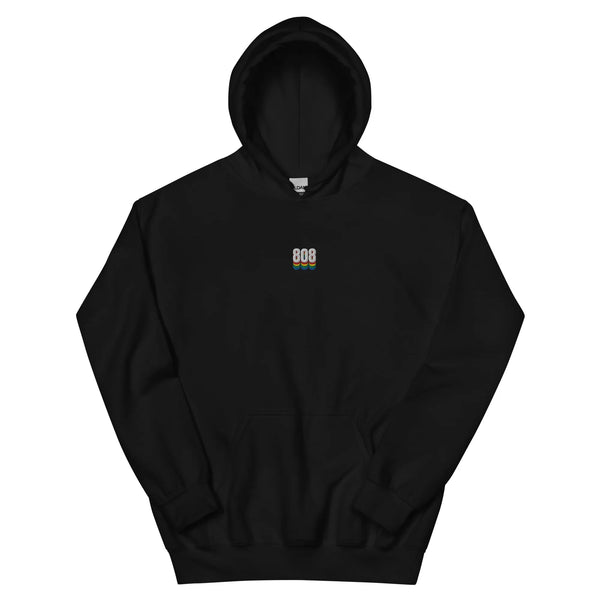
Pictured: the embroidered 808 hoodie.
Browse the full hip hop clothing catalog. Every piece is designed for exactly this intersection of function, culture, and creative identity.
The long-session version of this, laid out layer by layer, is in the music producer outfit guide.
Wear it
The pieces this guide is built around. Every one ships free, no minimum.